
Lentils are one of the cheapest, healthiest, and easiest foods you can keep in your pantry. They cook quickly without soaking, pack plenty of plant protein and fiber, and work in everything from soups and curries to salads and tacos. Many home cooks feel unsure about lentils, though, because each type cooks a little differently. Red lentils turn soft and creamy, while French green lentils stay firm and hold their shape. Once you know the differences, cooking lentils becomes simple. In this guide, you’ll learn about every common type of lentil, how long each one takes, the best water ratio, and how to cook them on the stove or in an Instant Pot. We’ll also share tips for seasoning, storing, and freezing cooked lentils so you always have a ready protein on hand. If you’re new to vegetarian cooking or just want to eat more plants, lentils are a great place to start.
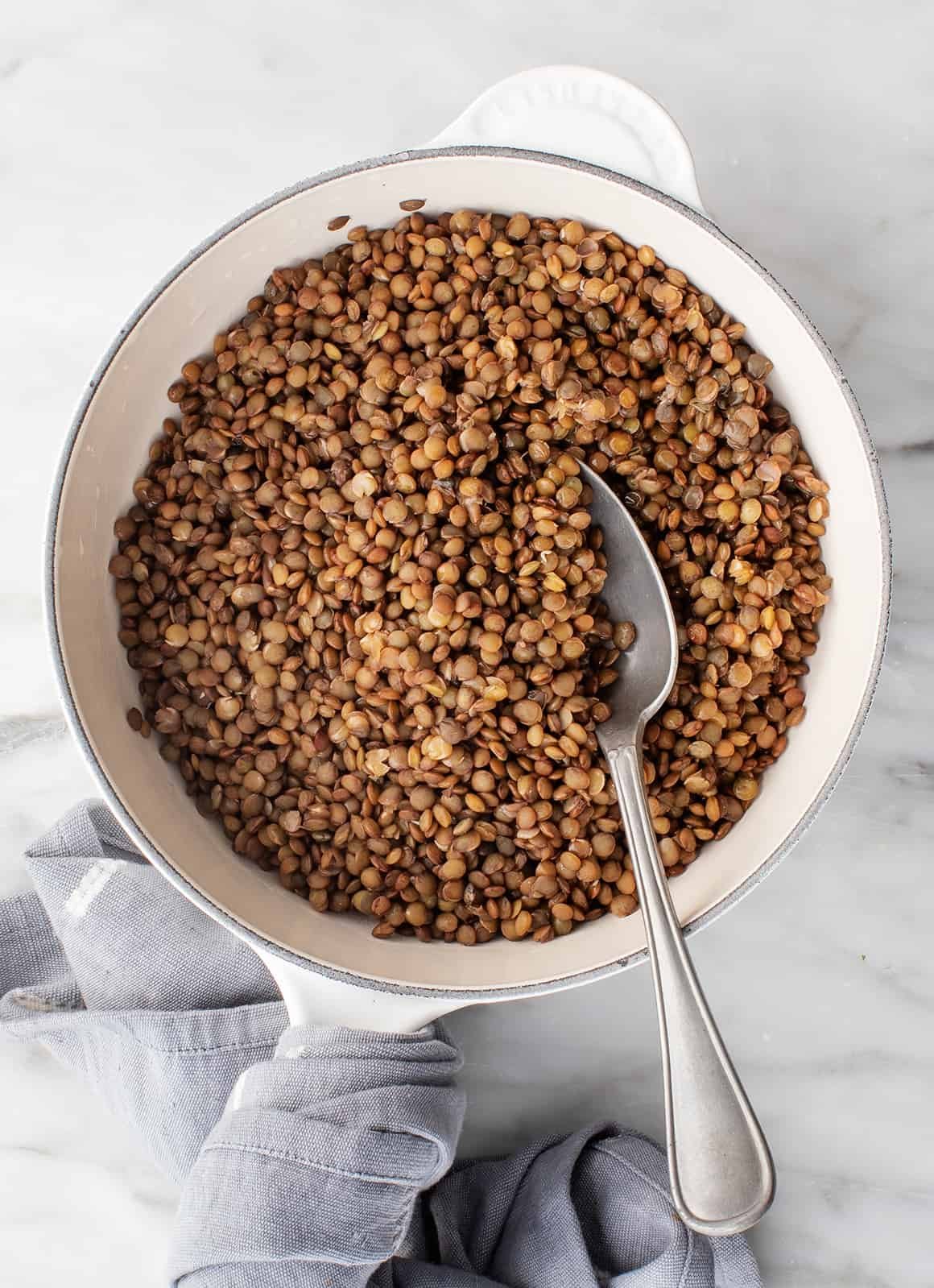
Photo credit: Love and Lemons
Types of Lentils and How to Use Them
Here is a quick guide to the most common lentils you will find at the grocery store.
| Lentil Type | Cook Time | Texture | Best For |
|---|---|---|---|
| Brown | 20 to 30 min | Soft, holds shape loosely | Soups, stews, tacos |
| Green | 25 to 35 min | Firm and earthy | Salads, sides, bowls |
| French or Puy | 20 to 25 min | Firm and peppery | Salads, side dishes |
| Black Beluga | 20 to 25 min | Firm, holds shape well | Salads, grain bowls |
| Red or Yellow | 15 to 20 min | Soft, breaks down | Dal, curry, soups |
Brown and Green Lentils
Brown lentils are the most common and budget friendly type. They soften nicely but can turn mushy if overcooked, so they work best in soups, stews, and taco fillings. Green lentils are a bit firmer and earthier, which makes them great for salads and side dishes.
French Green and Black Beluga Lentils
French green lentils, also called Puy lentils, are small, speckled, and peppery. They stay firm after cooking. RecipeTin Eats simmers them with carrot, onion, and thyme for a simple lentil ragout side dish. Black beluga lentils look like tiny caviar and hold their shape just as well.
Red and Yellow Lentils
Red and yellow lentils are split and hulled, so they cook fast and break down into a creamy texture. Use them for dal, curries, and thick soups. Kitchen Treaty cooks red lentils with sweet potato and coconut milk in the Instant Pot.
How to Cook Lentils on the Stove
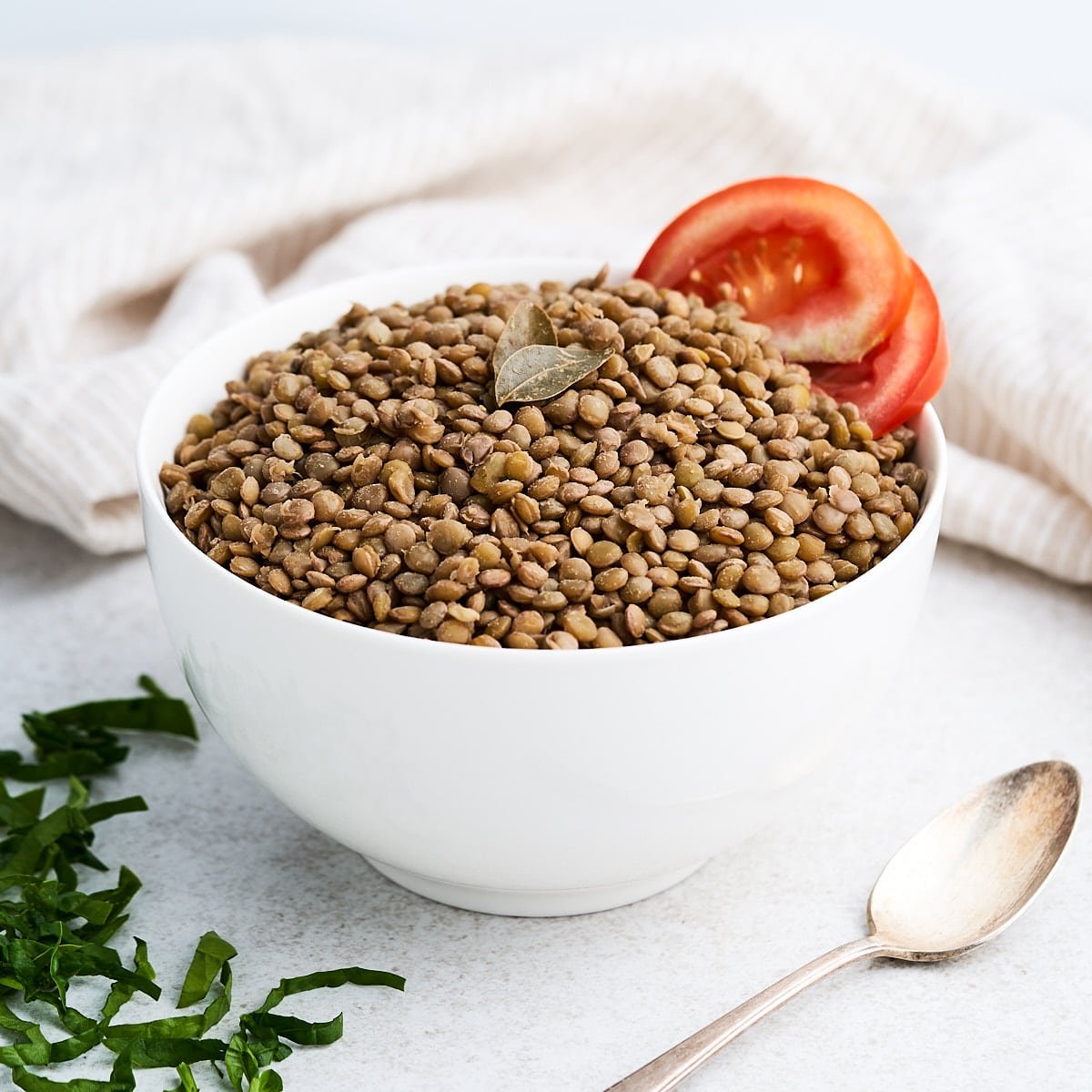
Photo credit: Live Eat Learn
Step 1. Sort and rinse. Spread the lentils on a plate and pick out any small stones or shriveled pieces. Then rinse them in a fine mesh strainer under cold water.
Step 2. Add water. Use about 3 cups of water for every 1 cup of dry lentils. Live Eat Learn suggests adding bay leaves or garlic to the pot for extra flavor.
Step 3. Simmer. Bring the pot to a boil, then lower the heat and simmer uncovered until tender. Check the timing chart above for your lentil type.
Step 4. Drain and season. Drain any extra water and season with salt after cooking. Adding salt at the start can make lentils take longer to soften. Love and Lemons tosses warm lentils with lemon juice, olive oil, Dijon, and parsley.
How to Cook Lentils in an Instant Pot
Rinse the lentils, then add them to the pot with about 1 1/2 to 2 cups of water for every cup of lentils, as Two Sleevers recommends. Pressure cook brown or green lentils on high for about 8 to 10 minutes, then let the pressure release naturally for 10 minutes. Red lentils need only a few minutes.
Tips for Better Lentils
- Do not soak lentils, since they cook quickly without it
- Simmer gently, since a hard boil can split them
- Add acidic ingredients like tomatoes or vinegar near the end
- Taste a few lentils to check doneness before draining
- Cook a big batch on Sunday for easy meals all week
Storing and Freezing Cooked Lentils
Store cooked lentils in an airtight container in the fridge for up to five days. Freeze them flat in freezer bags for up to three months. Thaw overnight in the fridge or add them straight to soups and sauces. Try them in creamy Marry Me lentils for an easy dinner.
Wrapping Up
Lentils are affordable, nutritious, and easy to cook once you know which type to use. Choose firm lentils like French green or black beluga for salads, and soft red lentils for soups and curries. For more ideas, explore our high protein vegetarian meals.
What is your favorite way to cook lentils? Share it in the comments below!