
Going vegetarian can feel exciting and a little overwhelming at the same time. Maybe you want to eat healthier, save money, help the planet, or simply try something new. Whatever your reason, the good news is that you don’t have to give up flavor, comfort food, or feeling full. Many people quit early because they cut out meat overnight and end up eating plain pasta and salads. With a little planning, though, a vegetarian diet can be satisfying, colorful, and easy to stick with. In this beginner guide, you’ll learn how to start slowly, build balanced plates, get enough protein, stock your kitchen, and handle eating out and family meals. We’ll also share simple meal ideas from popular food bloggers so you never feel stuck. Think of this as a step by step roadmap instead of a strict set of rules. Take what works for you, go at your own pace, and enjoy discovering new favorite foods along the way.
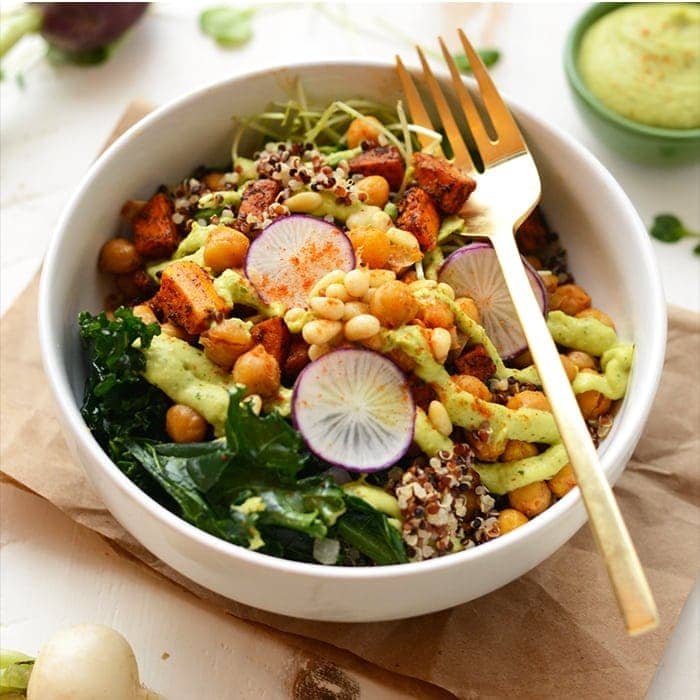
Photo credit: Fit Foodie Finds
Start Slowly
You don’t have to go all in on day one. Try Meatless Monday first, then add more vegetarian days each week. Another option is to replace one meal at a time, like breakfast or lunch, before changing dinner. Easing in gives your taste buds and routine time to adjust.
Build a Balanced Plate
Every meal should include a protein, a whole grain or starchy vegetable, plenty of veggies, and some healthy fat. Grain bowls make this easy. Fit Foodie Finds layers chickpeas, quinoa, roasted vegetables, and tahini dressing into one filling bowl.
Get Enough Protein
Protein keeps you full and helps you avoid that hungry, deprived feeling. Good vegetarian sources include beans, lentils, tofu, tempeh, edamame, eggs, Greek yogurt, cottage cheese, nuts, and seeds. Aim to include at least one of these at every meal. Our high protein vegetarian meals are a great place to start.
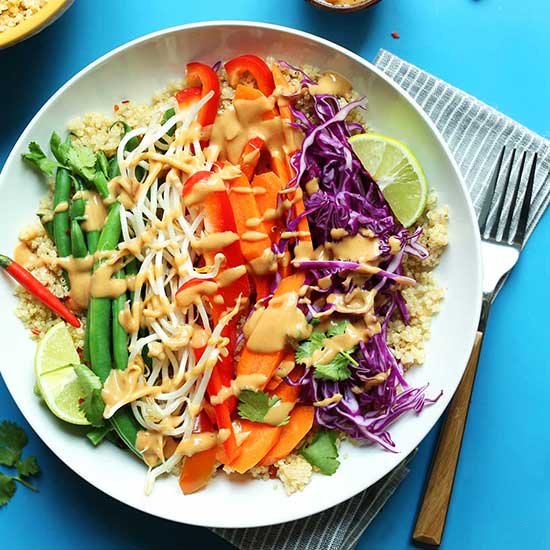
Photo credit: Minimalist Baker
Focus on Flavor
Meat adds savory depth, so replace it with bold ingredients like soy sauce, miso, smoked paprika, mushrooms, garlic, and fresh herbs. Sauces matter too. Minimalist Baker tops its quinoa gado gado bowl with a creamy peanut sauce that makes every bite exciting.
Stock Your Kitchen
Keep canned beans, lentils, grains, pasta, frozen vegetables, tofu, and a few favorite sauces on hand. When your pantry is ready, you won’t be tempted to order takeout. Check our vegetarian pantry staples shopping list for a full list.
Make Familiar Favorites
Start with meals you already love and swap out the meat. Tacos, chili, pasta, burrito bowls, and stir fries all work beautifully with beans, lentils, or tofu. Familiar flavors make the change feel easy instead of strange.
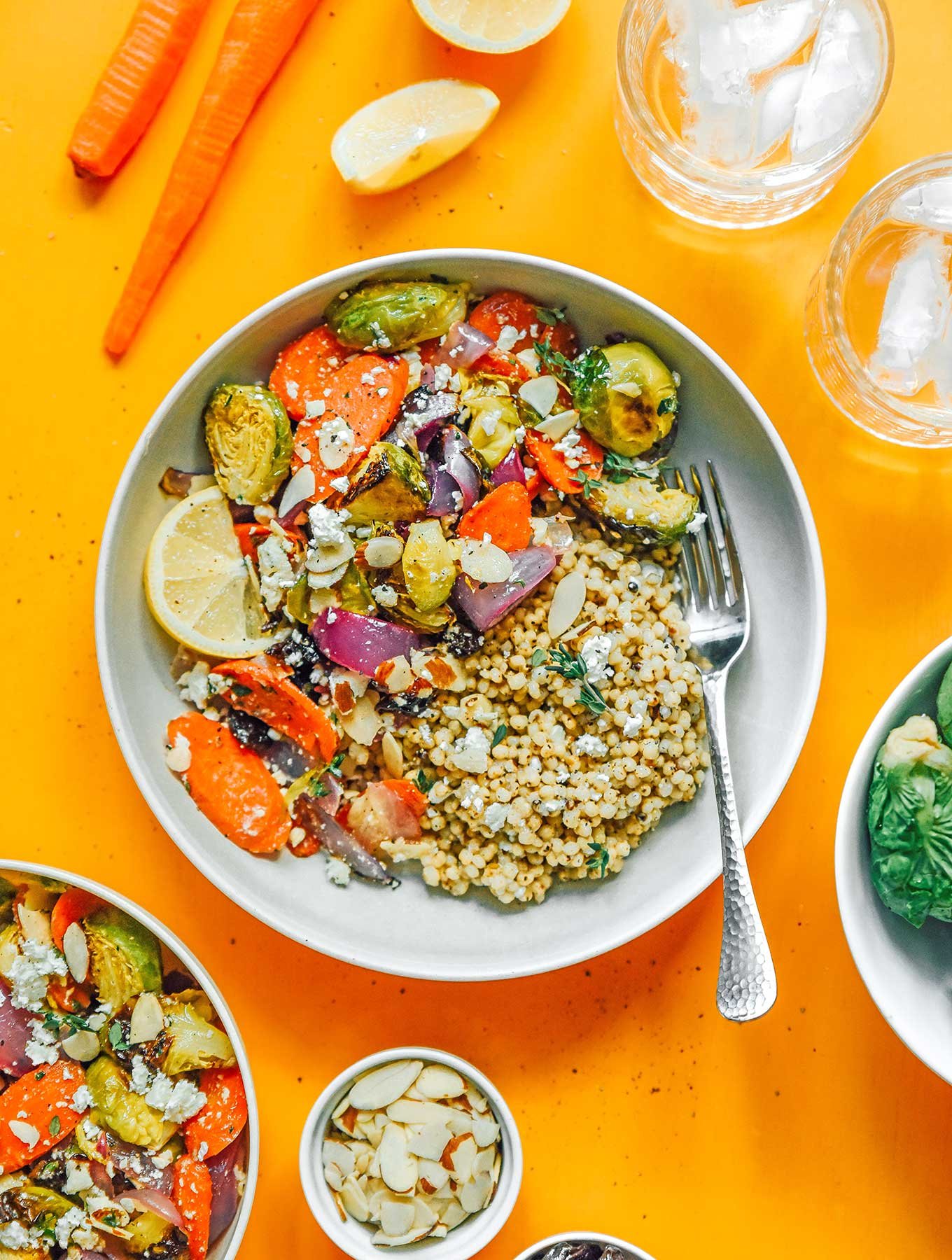
Photo credit: Live Eat Learn
Plan and Prep Ahead
Cook a big batch of grains, roast a tray of vegetables, and prep a protein on Sunday. Then mix and match them all week. Live Eat Learn turns simple roasted vegetables and grains into easy bowls you can build in minutes.
Eating Out and Family Meals
- Check menus online before you go
- Look for Mexican, Indian, Thai, and Mediterranean restaurants with lots of meatless options
- Offer to bring a vegetarian main dish to gatherings
- Cook one base meal and let meat eaters add protein on the side
Wrapping Up
Going vegetarian doesn’t have to feel restrictive. Start slowly, fill your plate with protein and vegetables, and lean on bold flavors and familiar meals. Be patient with yourself and celebrate small wins along the way. For more inspiration, browse our easy vegetarian dinner ideas.
What made you want to try vegetarian eating? Share your story in the comments below!