
Cooking pasta directly in the sauce sounds like a shortcut, but it actually makes better pasta. As noodles simmer in broth, tomatoes, or milk, they release starch that thickens the sauce into something silky and clingy, and every strand absorbs flavor instead of plain water. You also skip the colander, the second pot, and the extra dishes. Success comes down to getting the liquid ratio right so the pasta cooks through just as the sauce turns glossy. This guide walks you through how to cook pasta directly in the sauce, with simple liquid ratios for different pasta shapes, the best liquids to use, and how to finish with cheese or cream. You will also see real one pot pasta recipes from trusted food bloggers that show the method in action. Grab a wide, heavy pot and a wooden spoon, and get ready for richer, easier pasta nights.
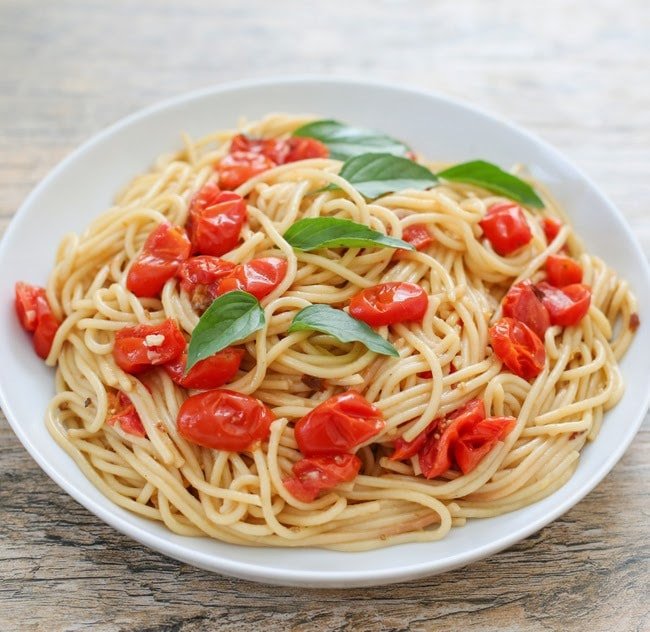
Photo credit: Kirbie’s Cravings
Why This Method Works
Starch normally gets poured down the drain with pasta water. Here it stays in the pot, thickening your sauce naturally and helping it cling to every bite. Pasta also seasons from the inside as it absorbs flavorful liquid.
Liquid Ratio Guide
Use these starting points for 8 ounces of dry pasta, then add a splash more liquid if the pot looks dry before the pasta is tender.
- Thin spaghetti or linguine needs about 3 to 3.5 cups liquid
- Short shapes like penne, rotini, or cavatappi need about 3 to 4 cups liquid
- Small shapes like orzo or ditalini need about 2.5 cups liquid
- Whole wheat pasta needs an extra half cup liquid
- Creamy sauces with milk need slightly more liquid since dairy thickens fast
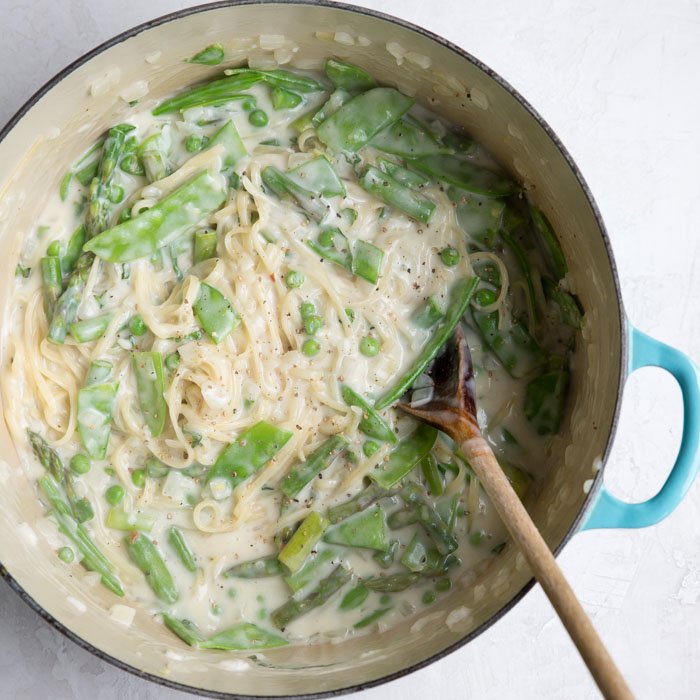
Photo credit: Kitchen Treaty
Step 1, Build Flavor First
Sauté onion, garlic, and any meat in olive oil until fragrant and browned. These first minutes create the flavor base for the whole dish.
Step 2, Add Liquid and Pasta
Pour in broth, water, or crushed tomatoes and bring to a boil. Add dry pasta, pressing it under the liquid so every piece is submerged.
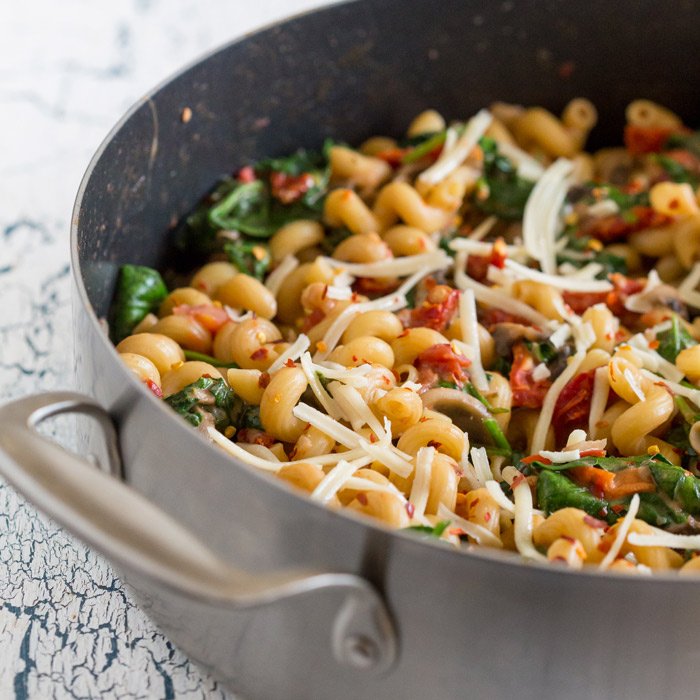
Photo credit: Kitchen Treaty
Step 3, Simmer and Stir
Lower to a lively simmer and stir every couple of minutes so noodles do not stick. Cook uncovered for most short shapes, or cover partially for long noodles.
Step 4, Watch the Texture
Pasta usually needs one to two minutes longer than the package time. If liquid disappears before the pasta is tender, add a quarter cup at a time.
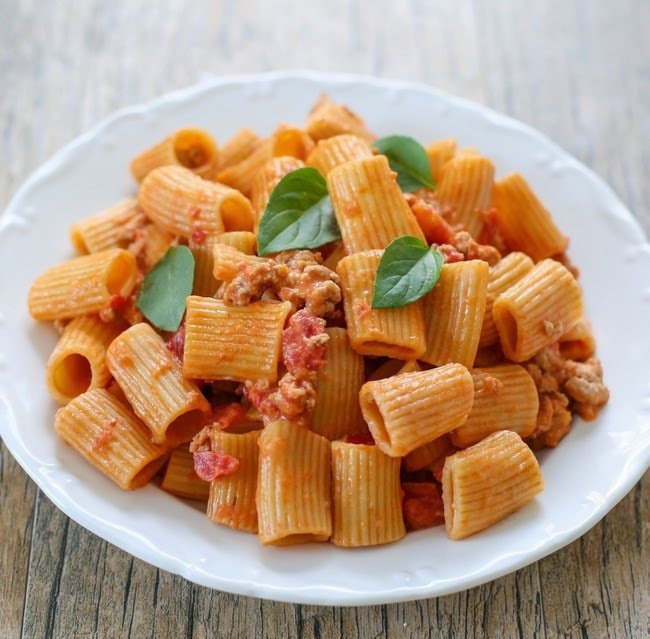
Photo credit: Kirbie’s Cravings
Step 5, Finish Off the Heat
Stir in cheese, cream, butter, or fresh greens once the pot is off the burner. Let it rest for two minutes so the sauce thickens and settles.
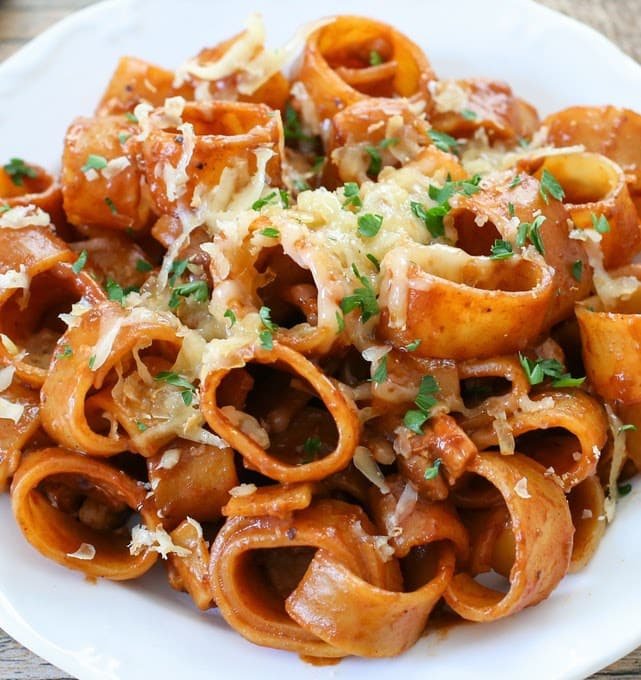
Photo credit: Kirbie’s Cravings
Common Mistakes to Avoid
- Using a narrow pot that crowds the pasta
- Adding cheese over high heat so it turns grainy
- Forgetting to stir in the first five minutes
- Adding all the salt before tasting the reduced sauce
Recipes to Practice With
- One Pot Pasta from Kirbie’s Cravings
- One Pot Pasta Primavera from Kitchen Treaty
- One Pot Pasta Florentine from Kitchen Treaty
- One Pot Creamy Tomato Pasta from Kirbie’s Cravings
- One Pot BBQ Chicken Pasta from Kirbie’s Cravings
Wrapping Up
Cooking pasta in the sauce gives you creamier, more flavorful pasta with fewer dishes. Follow the ratios, stir often, and finish off the heat for silky results. Ready for more ideas? Browse our one pot pasta recipes and pin this guide for later.
What is your favorite pasta to make in one pot? Tell us in the comments below!