
Simmering chili is one of the coziest, most satisfying dinners you can make, and it doesn’t need meat to be hearty. Vegetarian chili gets its rich, thick texture from beans, sweet potatoes, peppers, and a few smart cooking tricks. When you layer the flavors the right way, every spoonful tastes deep, smoky, and comforting. In this guide, you’ll learn how to build a flavorful base, which beans and vegetables work best, how to season your chili like a pro, and how to make it thick instead of watery. We’ll also share secret ingredients that food bloggers swear by, like cocoa powder and chipotle peppers. Vegetarian chili is budget friendly, freezer friendly, and easy to customize with whatever you have in the pantry. It works for game day, cold weeknights, and weekly meal prep. Grab your biggest pot and let’s make a chili so good that even meat lovers come back for seconds.
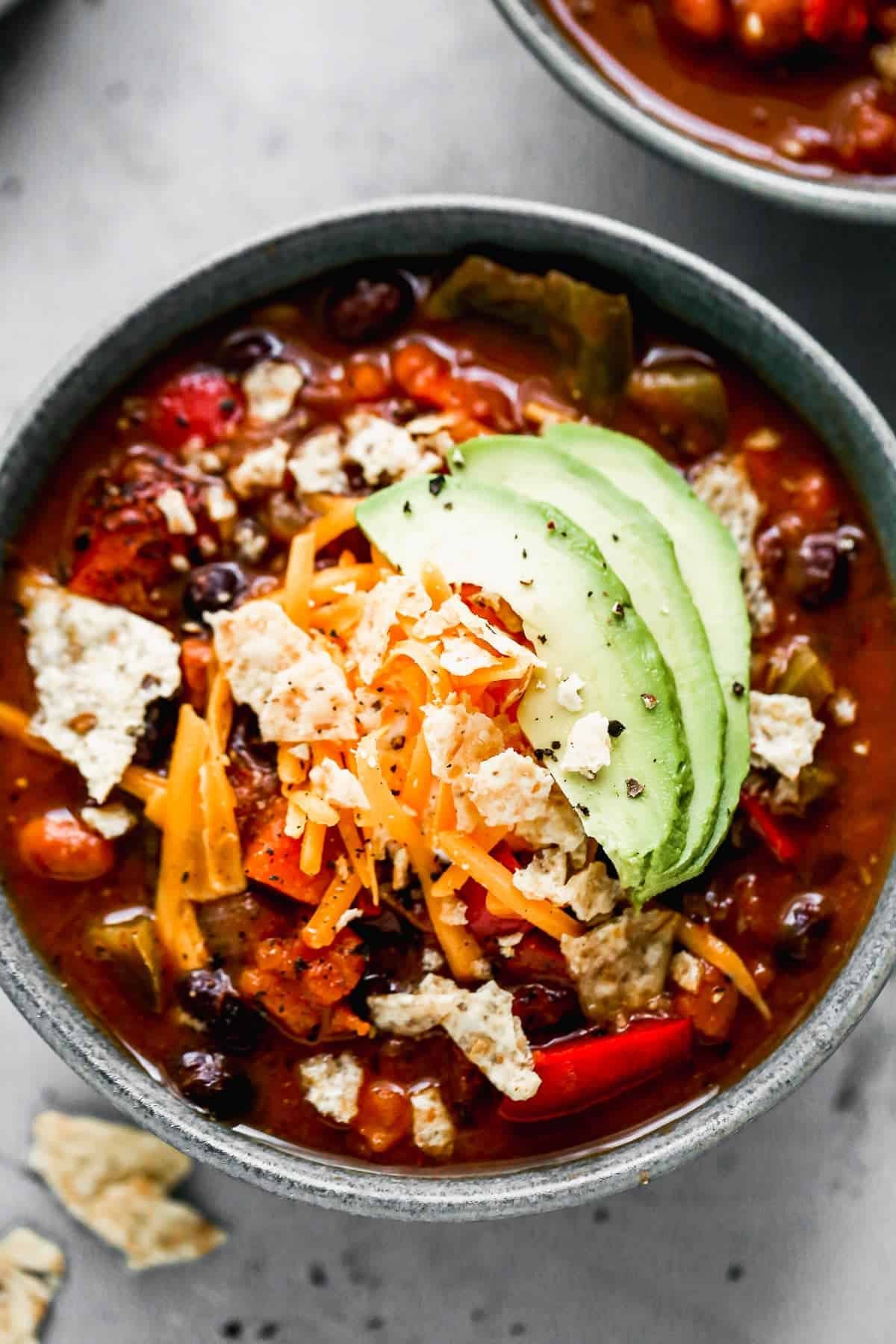
Photo credit: Well Plated
What You Need
- Olive oil
- Onion, garlic, and bell peppers
- Sweet potato or carrots for body
- Two or three kinds of canned beans
- Fire roasted diced tomatoes and tomato sauce
- Vegetable broth
- Chili powder, cumin, smoked paprika, and oregano
- Optional chipotle peppers in adobo, cocoa powder, or corn
Step 1. Build the Flavor Base
Heat oil in a large pot or Dutch oven over medium heat. Add onion and bell peppers and cook until soft, about 6 to 8 minutes. Well Plated adds diced sweet potato with the onions so it starts to soften early and adds natural sweetness.
Step 2. Bloom the Spices
Add garlic, chili powder, cumin, smoked paprika, and oregano. Stir for about one minute until fragrant. Toasting spices in oil wakes up their flavor and makes the whole pot taste richer.
Step 3. Add Beans, Tomatoes, and Broth

Photo credit: Kitchen Treaty
Mixing different beans gives your chili better texture. Try black beans, kidney beans, and pinto beans together. Kitchen Treaty uses five kinds of beans plus a spoonful of cocoa powder for deeper, almost smoky flavor. Add tomatoes and enough broth to cover everything.
Step 4. Simmer and Thicken
Bring the chili to a boil, then lower the heat and simmer for 20 to 40 minutes, stirring now and then. Watery chili is a common problem, and there are a few easy fixes. Skinnytaste blends one can of beans with water before adding it to the pot. You can also blend a cup of the finished chili and stir it back in, or mash some beans right in the pot.
Step 5. Taste and Adjust
Season with salt and pepper at the end. Add a squeeze of lime or a splash of vinegar to brighten the flavors. Want more heat? Stir in chopped chipotle peppers in adobo or a pinch of cayenne.

Photo credit: Ambitious Kitchen
Best Toppings for Vegetarian Chili
- Shredded cheddar or pepper jack
- Sour cream or Greek yogurt
- Sliced avocado or guacamole
- Chopped cilantro and green onions
- Crushed tortilla chips
- Pickled jalapeños
Make It in a Slow Cooker or Instant Pot
For a slow cooker, sauté the onions and spices first, then add everything to the crock and cook on low for 6 to 8 hours. In an Instant Pot, use the sauté setting first, then pressure cook on high for about 10 minutes with a natural release. Ambitious Kitchen simmers its version on the stove in about an hour.
Storing and Freezing
Chili tastes even better the next day. Keep leftovers in an airtight container in the fridge for up to five days. Freeze single portions for up to three months and reheat on the stove.
Wrapping Up
Hearty vegetarian chili comes down to a good flavor base, toasted spices, a mix of beans, and a little patience while it simmers. Thicken it with blended beans and finish with your favorite toppings. For more cozy bowls, try our vegetarian soup recipes.
What is your secret chili ingredient? Tell us in the comments below!