
Cast iron skillets can last for generations, but only if you treat them right. Seasoning is a thin layer of oil baked onto the iron until it bonds to the surface, creating a natural nonstick coating that also protects the pan from rust. Every time you cook with fat, that layer gets a little stronger. Neglect it, soak it, or put it away wet, and rust can creep in fast. Good news, even a badly rusted flea market find can be brought back to life with simple supplies you already own. This guide shows how to season a new cast iron skillet, how to restore a rusty one, and how to care for it every day so it keeps getting better. Real before and after photos from home cooks show exactly what to expect. Grab some steel wool, a neutral oil, and your oven, and let us give your skillet a fresh start.
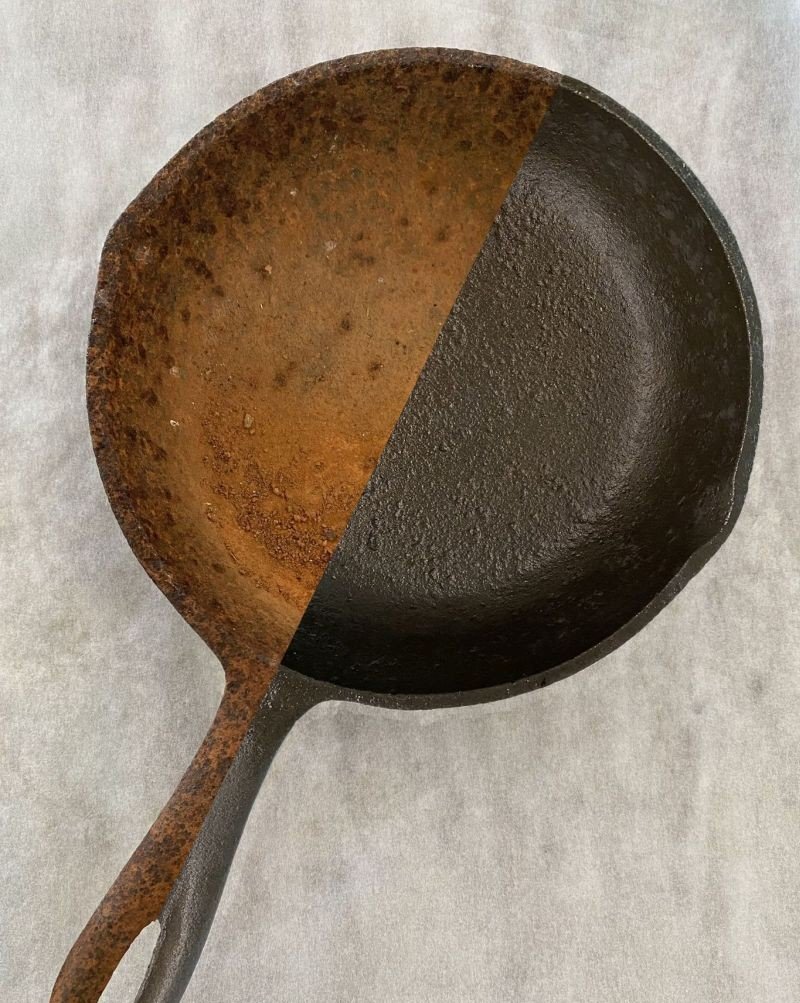
Photo credit: The Navage Patch
What You Need
- Steel wool or a chain mail scrubber
- Mild dish soap
- Coarse kosher salt
- Neutral high smoke point oil like vegetable, canola, or shortening
- Paper towels or a lint free cloth
- Your oven
How to Restore a Rusty Skillet
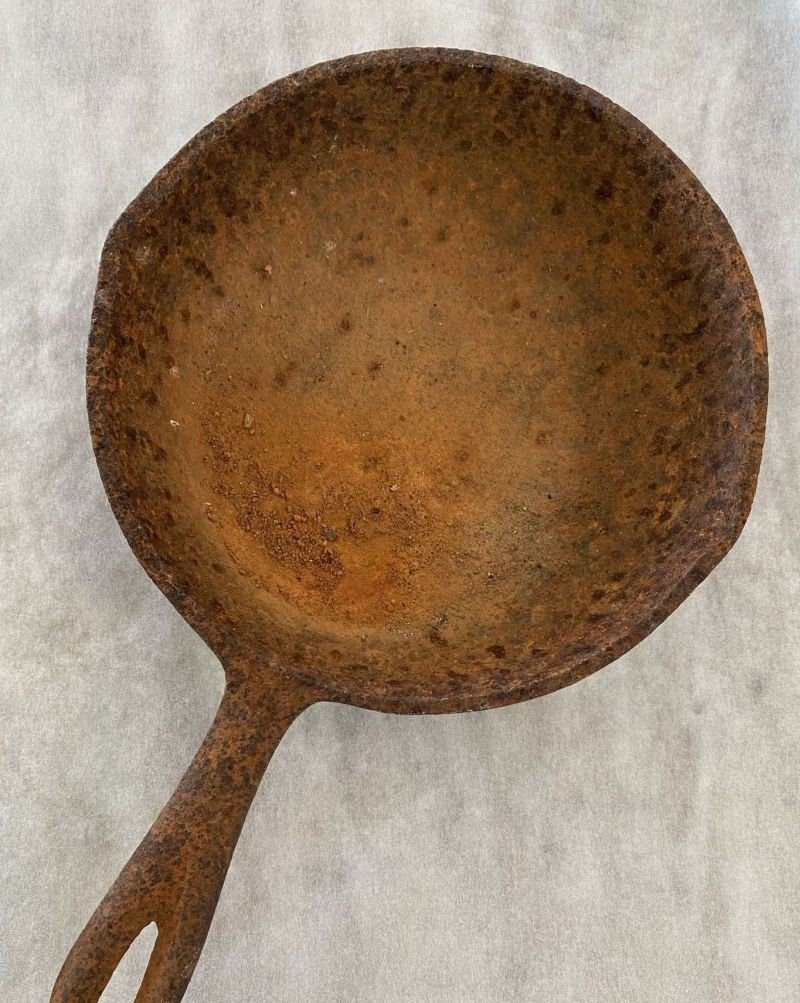
Photo credit: The Navage Patch
Step 1, Scrub Away the Rust
Scour every rusty spot with steel wool and warm soapy water until you see dull gray or black iron. Coarse salt works as a gentle abrasive for lighter rust.
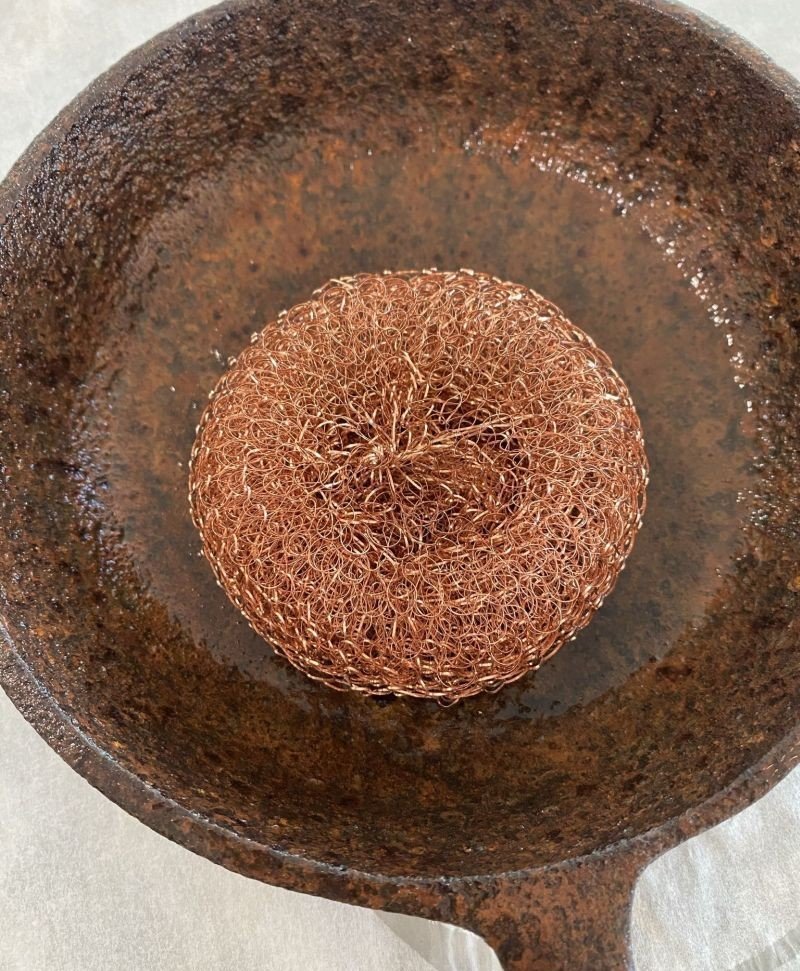
Photo credit: The Navage Patch
Step 2, Rinse and Dry Completely
Rinse well, towel dry, then set the pan over low heat for a few minutes. Any lingering moisture leads straight back to rust, so dry it thoroughly.
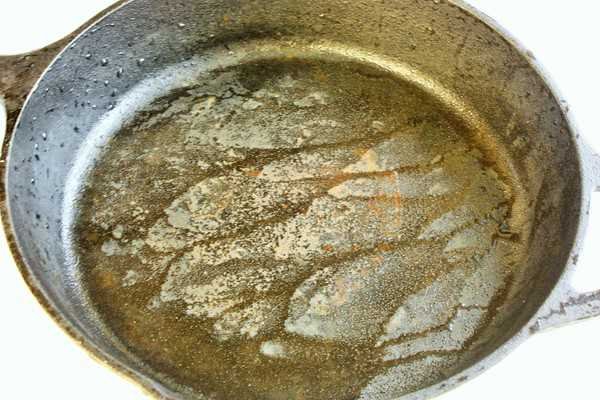
Photo credit: Sustainable Cooks
Step 3, Apply a Very Thin Coat of Oil
Rub a small amount of oil over every surface, including the handle and underside. Then wipe it all off as if you made a mistake. Thick oil turns sticky, while a thin film bakes into smooth seasoning.
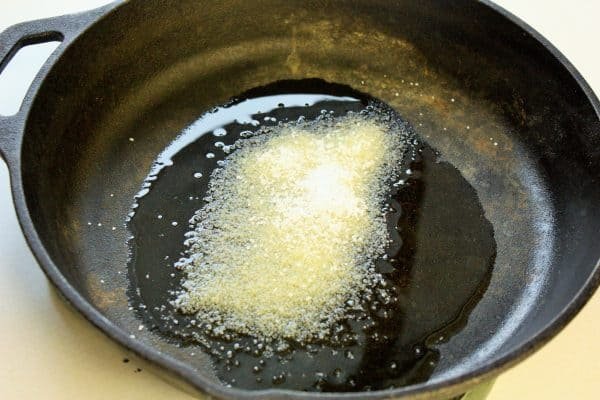
Photo credit: Sustainable Cooks
Step 4, Bake Upside Down
Place the skillet upside down on the middle oven rack with a sheet pan or foil underneath. Bake at 450 to 500 degrees Fahrenheit for one hour, then let it cool in the oven.
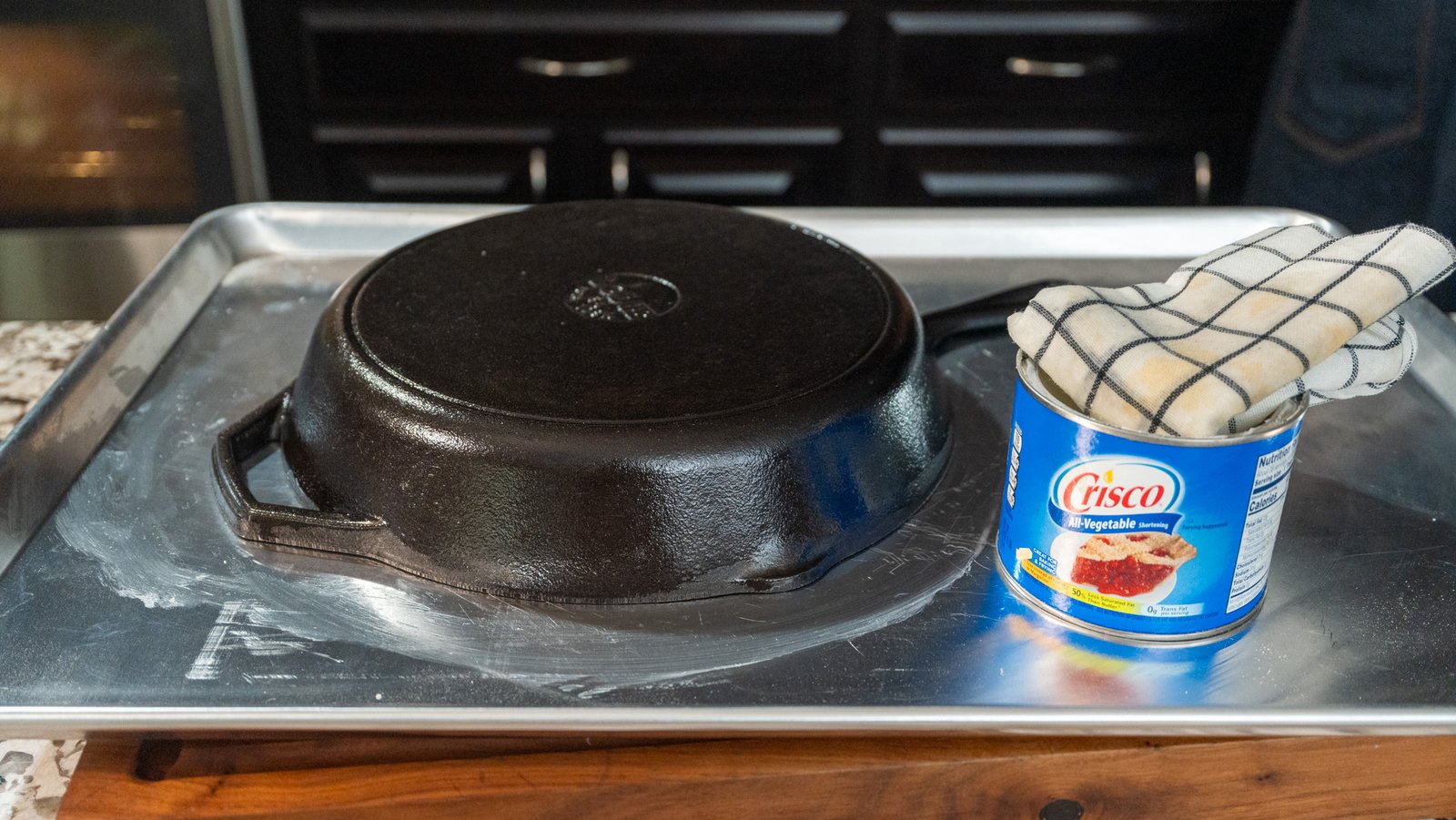
Photo credit: Smokin and Grillin With AB
Step 5, Repeat for a Stronger Finish
Repeat the oil and bake process two or three times for a deep, even black finish. Each round builds a tougher, slicker surface.
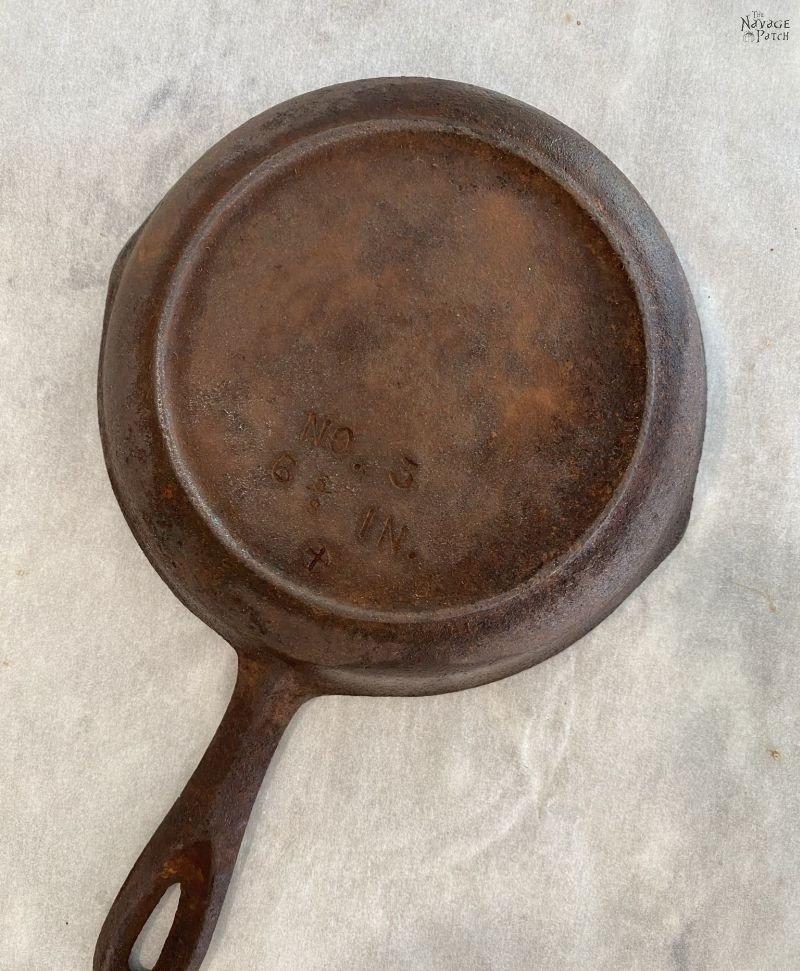
Photo credit: The Navage Patch
How to Season a New Skillet
Most new skillets come preseasoned, but an extra round or two of oven seasoning helps food release better from the start. Wash, dry, oil thinly, and bake just like above.
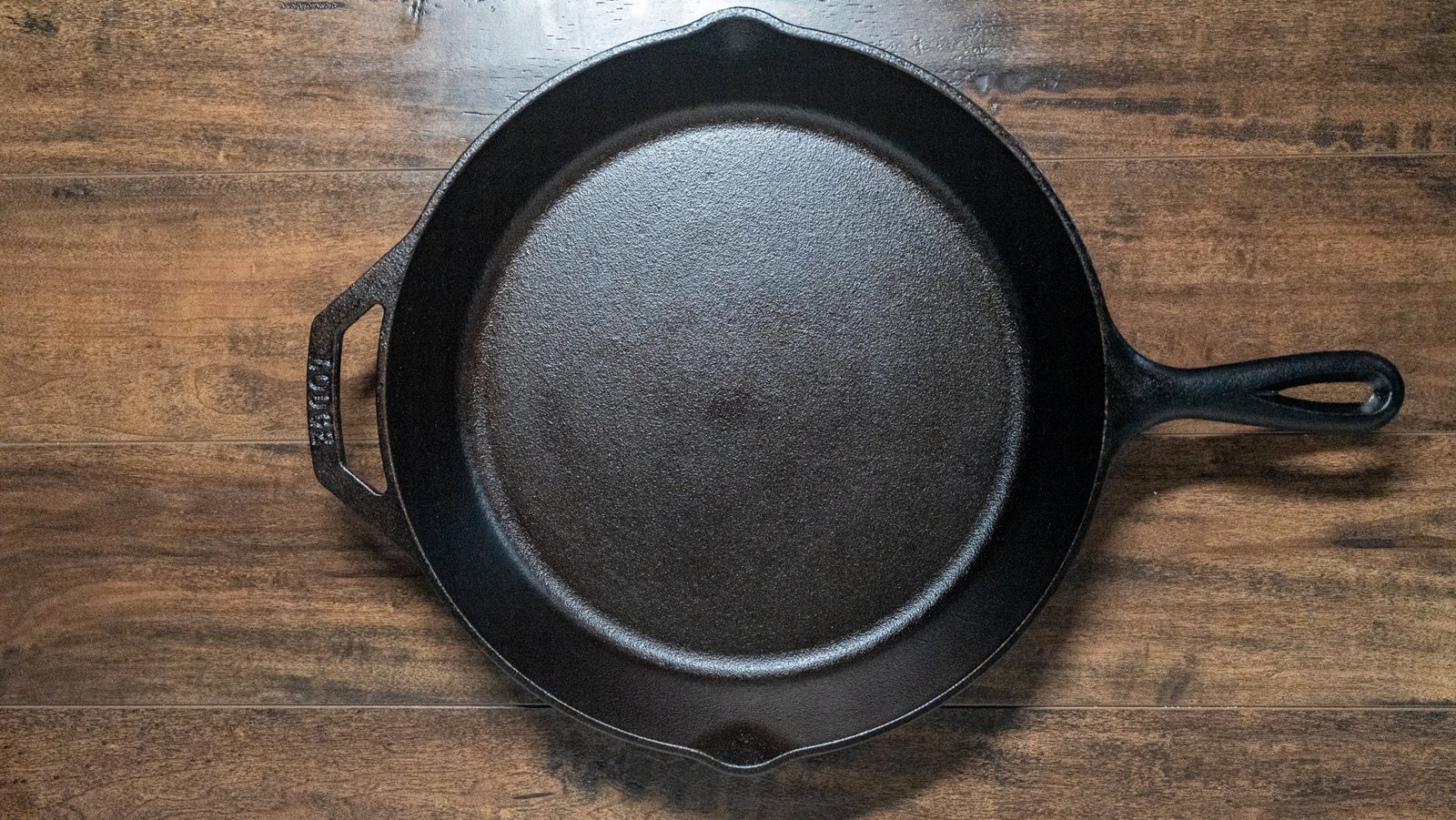
Photo credit: Smokin and Grillin With AB
Everyday Cast Iron Care
- Clean while warm with hot water and a scrubber
- Use a little soap when needed, since modern dish soap will not hurt seasoning
- Never soak cast iron or put it in the dishwasher
- Dry right away on the stove
- Wipe on a thin layer of oil before storing
- Cook fatty foods often to build seasoning
Troubleshooting
- Sticky surface means too much oil, so bake again at high heat
- Flaking black bits mean old seasoning is breaking down, so scrub and reseason
- Food sticking means the pan needs more seasoning or more preheating
- Dull gray spots mean seasoning wore thin, so oil and bake
Wrapping Up
With a little care, your cast iron skillet will only get better with age. Restore rust with a good scrub, bake on thin coats of oil, and dry it every time you wash it. Ready to put your skillet to work? Try our cast iron skillet dinner ideas and pin this care guide for later.
Do you have a cast iron pan that needs rescuing? Share your story in the comments below!