
Few things feel more disappointing than slicing into a sourdough loaf you spent two days on and finding a dense, heavy, gummy center. Good news, a dense loaf almost always comes down to a handful of common causes, and each one has a simple fix. Most of the time, the problem starts long before baking, with a sluggish starter or dough that did not ferment long enough. Other times, weak gluten, rushed shaping, or slicing too soon is to blame. This troubleshooting guide walks through why sourdough turns out dense, how to spot each cause by looking at your crumb, and exactly what to change on your next bake. Real photos from experienced bakers show what healthy dough and properly proofed bread should look like. Read through each section, compare it with your last loaf, and adjust just one thing at a time so you can see what truly made the difference.

Photo credit: Homegrown Happiness
1. Weak or Sluggish Starter
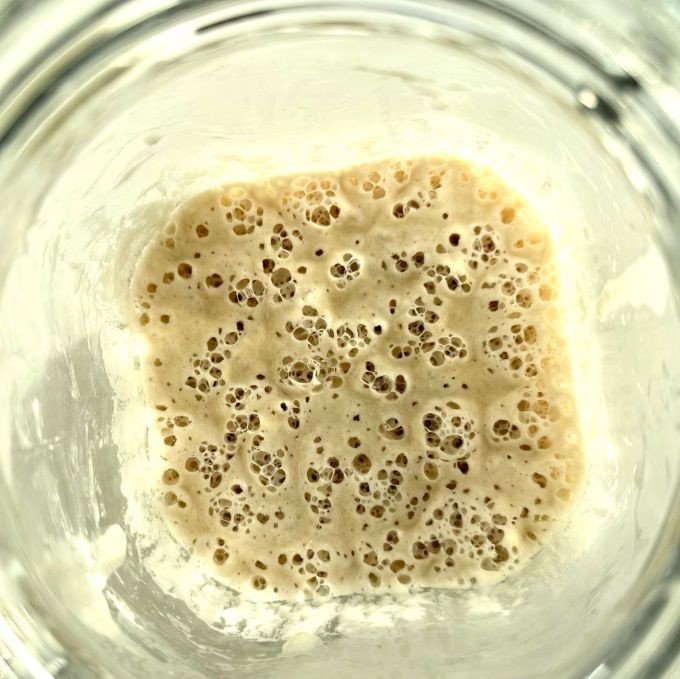
Photo credit: Living Sweet Moments
Your starter provides all the lift in sourdough. When it is young, cold, or underfed, there simply is not enough yeast to raise the dough.
Quick fix. Use starter only after it reliably doubles within 4 to 8 hours of feeding, and mix your dough right at its peak.
2. Underproofed Dough
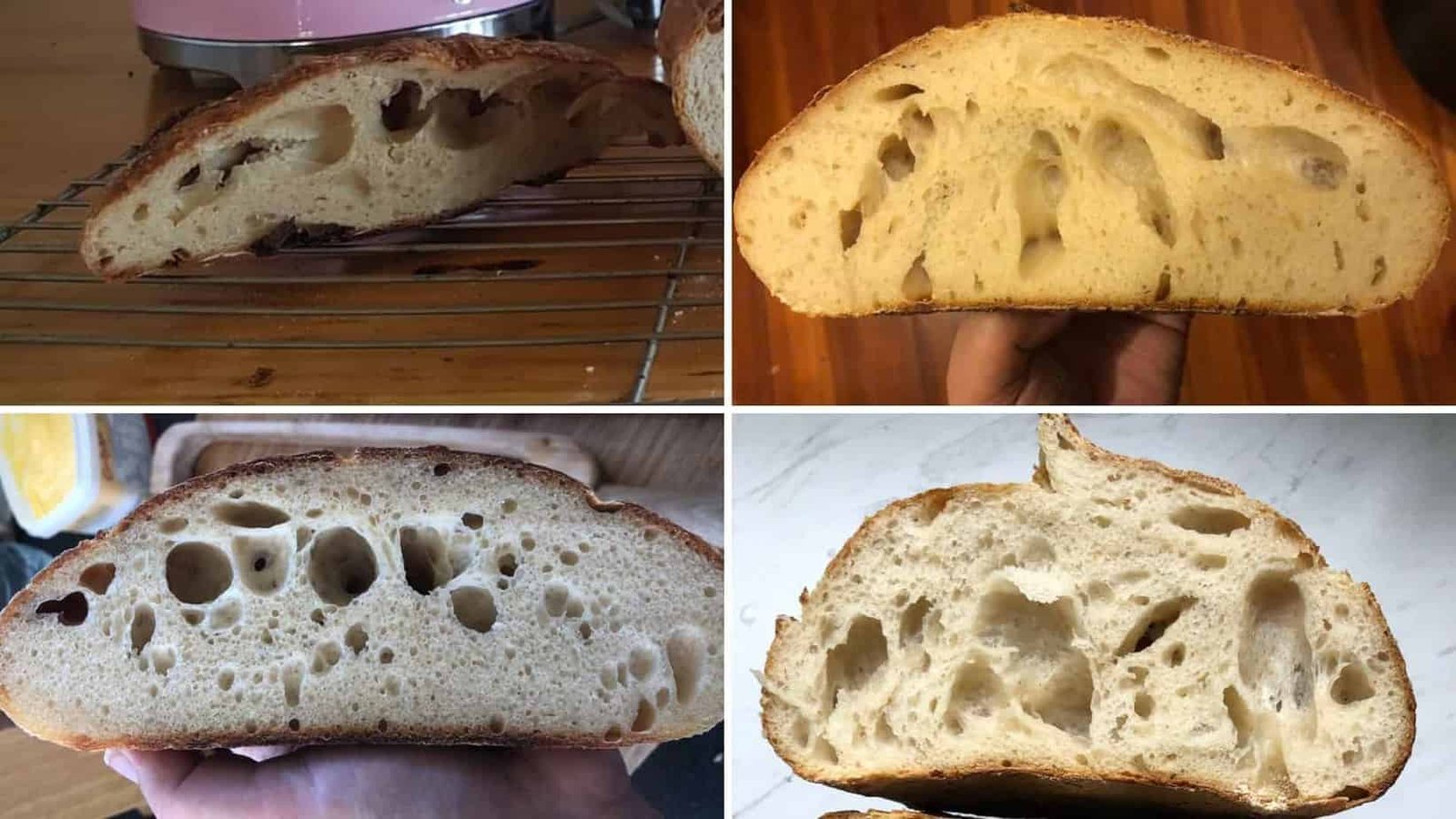
Photo credit: Homegrown Happiness
Underproofing is the most common reason for dense bread. Look for a tight crumb with a few large tunnels near the top and gummy patches underneath.
Quick fix. Let bulk fermentation run longer until dough grows 50 to 75 percent, looks domed, and jiggles when you shake the bowl.
3. Not Enough Gluten Strength

Photo credit: Homegrown Happiness
Without enough strength, dough cannot trap gas and spreads into a flat, tight loaf.
Quick fix. Do three or four rounds of stretch and folds, and choose bread flour with at least 12 percent protein.
4. Cold Kitchen

Photo credit: Homegrown Happiness
Fermentation slows dramatically below 70 degrees Fahrenheit. Recipes written for warm kitchens will leave your dough underfermented if you follow the clock.
Quick fix. Use warm water, place dough near a warm spot like an oven with the light on, and watch the dough rather than the timer.
5. Loose Shaping

Photo credit: Homegrown Happiness
Loosely shaped dough lacks surface tension and spreads sideways in the oven instead of rising up.
Quick fix. Drag the dough across the counter after shaping until the top feels taut, then proof it in a banneton.
6. Too Much Flour or Low Hydration
Extra flour on the counter or a very stiff dough leaves little water to create steam and open the crumb.
Quick fix. Weigh ingredients, keep hydration around 70 percent, and use wet hands instead of extra flour when handling dough.
7. Shallow Score or No Steam

Photo credit: Homegrown Happiness
Without a good score and steam, your crust sets too quickly and traps the loaf before it can fully expand.
Quick fix. Score about half an inch deep and bake covered in a preheated Dutch oven for the first 20 minutes.
8. Slicing Too Soon
Inside a hot loaf, steam is still cooking the crumb. Cutting early makes even well baked bread look dense and gummy.
Quick fix. Wait at least one hour, ideally two, before slicing.
Quick Dense Loaf Checklist
- Starter doubles reliably after feeding
- Bulk rise reaches 50 to 75 percent growth
- Dough feels airy and jiggly before shaping
- Shaped loaf holds a tight, tall form
- Bread cools fully before slicing
Wrapping Up
Dense sourdough is frustrating, but it is also one of the best teachers you will have. Change one variable at a time, keep notes, and your next loaf will be lighter and more open. Want a reliable recipe to practice with? Try our easy sourdough bread recipe and pin this guide for your next bake.
What was the fix that saved your sourdough? Share it in the comments below!