
Homemade gluten free pizza used to mean a crumbly cracker crust that broke the moment you picked up a slice. Not anymore. With the right flour blend, warm water, a quick rise, and a generous splash of olive oil, you can make a soft, chewy crust that spreads easily across a sheet pan and holds up to plenty of toppings. Gluten free dough won’t stretch exactly like wheat dough, but a few tricks make it far more flexible and easy to shape. This guide is adapted from Iowa Girl Eats, whose gluten free pizza crust uses a flour blend with binder, instant yeast, and a short warm rise. You’ll learn why prebaking the crust matters, how to shape sticky dough without tearing it, and how to add psyllium husk if you want dough you can press and stretch by hand. You’ll also find fixes for soggy centers and tough edges. Friday pizza night is about to get a lot more fun for the whole family.
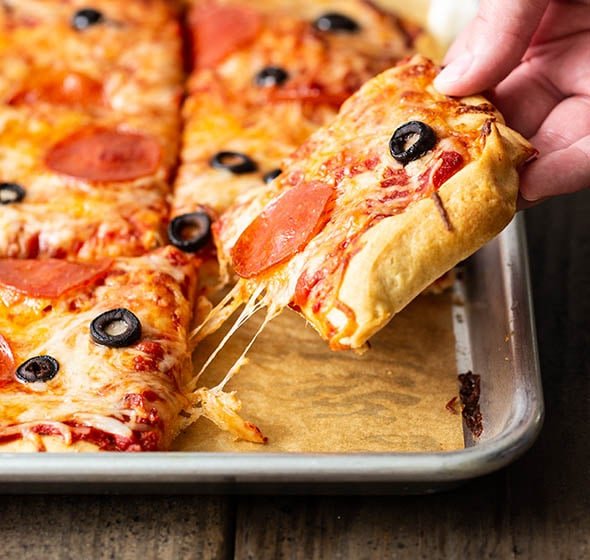
Photo credit: Iowa Girl Eats
Ingredients You Need
- Two and a half cups gluten free flour blend with binder
- One packet quick rise instant yeast
- One tablespoon baking powder
- One tablespoon sugar
- One teaspoon salt
- One and a half cups warm water
- Half cup extra virgin olive oil
- Gluten free pizza sauce, shredded cheese, and toppings
Get the full original recipe at Iowa Girl Eats gluten free pizza crust.
Step 1. Warm the Oven for Rising
Set your oven to its bread proofing setting or heat it to about 100°F, then turn it off. Warmth helps gluten free dough rise quickly. Move the rack to the lowest position while you mix.
Step 2. Mix the Dry Ingredients
Combine the gluten free flour blend, instant yeast, baking powder, sugar, and salt in a stand mixer bowl. Mix on low until evenly blended. If you want a more stretchy dough, add one tablespoon of psyllium husk powder now.
Step 3. Add Warm Water and Olive Oil
Heat the water to about 110°F and pour it into the dry ingredients. Beat on medium until combined, rest for one minute, then add the olive oil. Beat for another minute until the dough looks thick, glossy, and sticky.
Step 4. Let It Rise
Scrape down the bowl, cover it with a towel, and set it in the warm oven for about 30 minutes. Remove the bowl and heat the oven to 425°F. Move the rack to the center position.
Step 5. Shape With Oiled Hands
Line a rimmed sheet pan with parchment and scrape the dough into the center. Spray your hands and the dough generously with oil, then press and spread it to the edges. Oil is the secret to shaping sticky dough without tearing it.
Step 6. Prebake the Crust
Bake the plain crust for about 13 to 15 minutes until it’s evenly golden. Prebaking keeps the center from turning gummy under sauce and cheese. Don’t pull it out early.
Step 7. Top and Finish Baking
Spread on gluten free pizza sauce, cheese, and your favorite toppings. Bake another 10 to 12 minutes until the cheese bubbles and browns. Let it rest a few minutes, then slice into squares.
Want Dough You Can Roll and Stretch?
Psyllium husk powder acts like gluten by trapping moisture and adding flexibility. Add one tablespoon per two and a half cups of flour blend, then let the dough rest ten minutes before shaping. You’ll be able to roll it between parchment and stretch it into rounds.
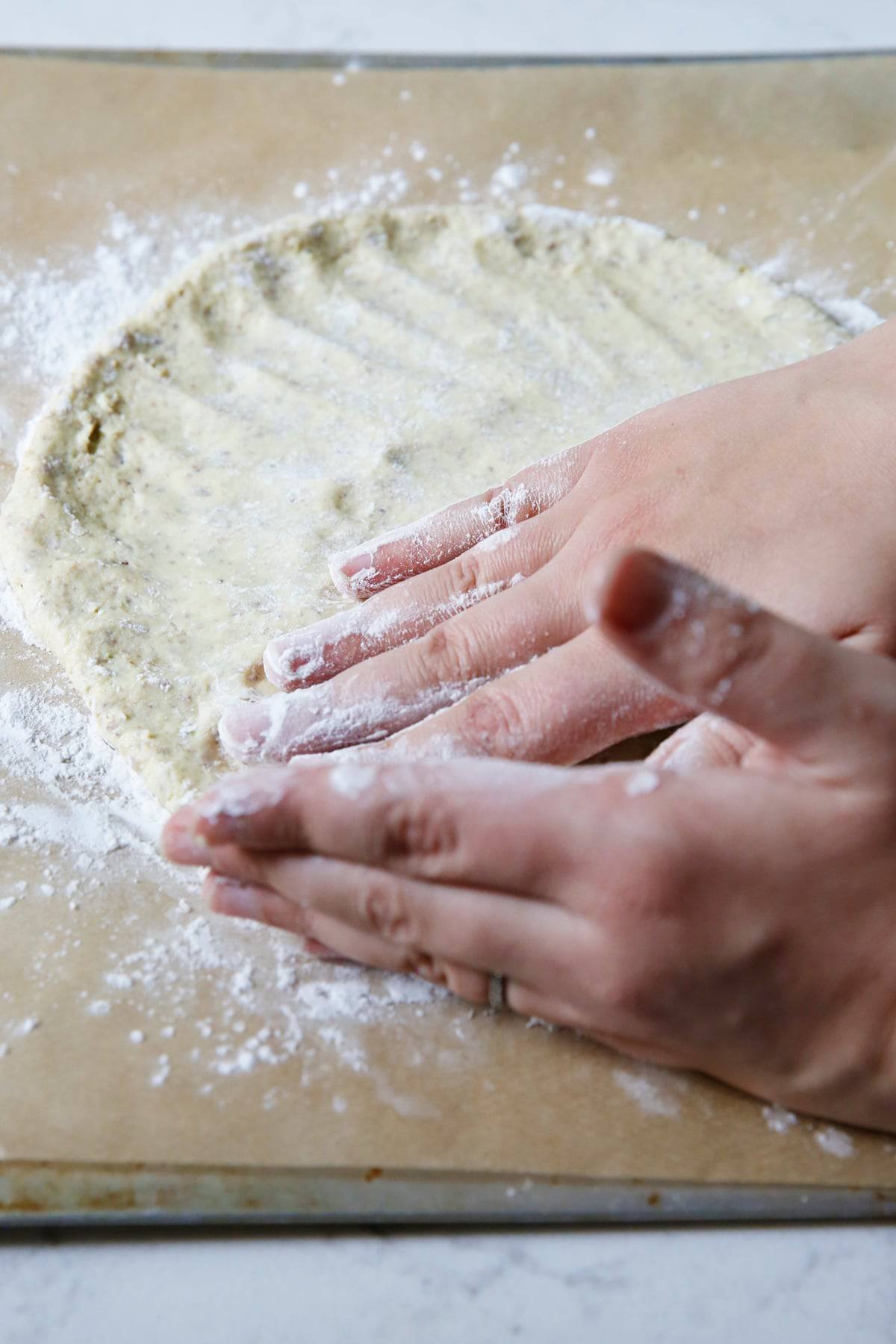
Photo credit: Lexi’s Clean Kitchen
Prefer a grain free option? Try Lexi’s best gluten free pizza crust made with tapioca flour, or this almond flour pizza crust from The Roasted Root.
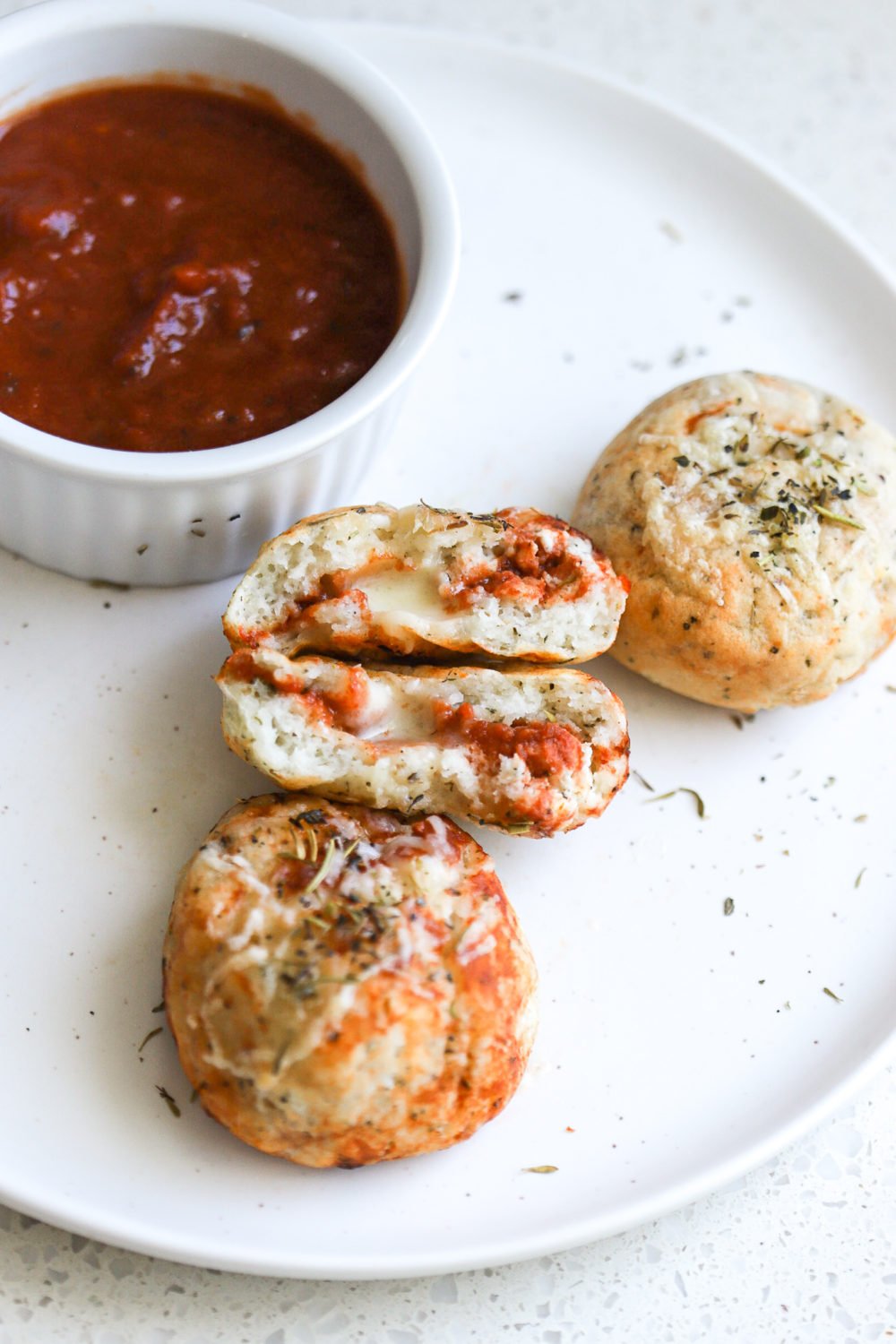
Photo credit: Basics with Bails
Kids love these gluten free pizza bites for parties and lunch boxes too.
How to Fix Common Gluten Free Pizza Problems
- Soggy center means the crust needed a longer prebake
- Tough edges come from too much flour while shaping
- Dough tearing improves with more oil on your hands
- Bland crust gets a boost from garlic powder and Italian seasoning
- Dense texture often means the water was too cool for the yeast
Wrapping Up
Gluten free pizza night can be easy, fun, and seriously delicious. Make a batch this weekend and let everyone pick their own toppings. Need a homemade flour blend? Learn how to make your own gluten free flour blend first.
What toppings will go on your first gluten free pizza? Tell us in the comments below!