
Charcuterie boards look impressive, but building one is easier than you might think. With a few cheeses, cured meats, crackers, and colorful extras, you can create a stunning spread in about 20 minutes, no cooking required. Success comes down to a simple formula and a little planning on placement. Once you learn the basic steps, you can build boards for date nights, holidays, game days, and big parties. In this step by step guide, you’ll learn what to buy, how much you need per person, and exactly how to arrange everything so your board looks full and inviting. We’ll also share tips from popular food bloggers who build boards all the time, plus ideas for keeping costs down. If you have never made a charcuterie board before, start here. By the end, you’ll feel confident putting together a beautiful board that guests will gather around all night long.
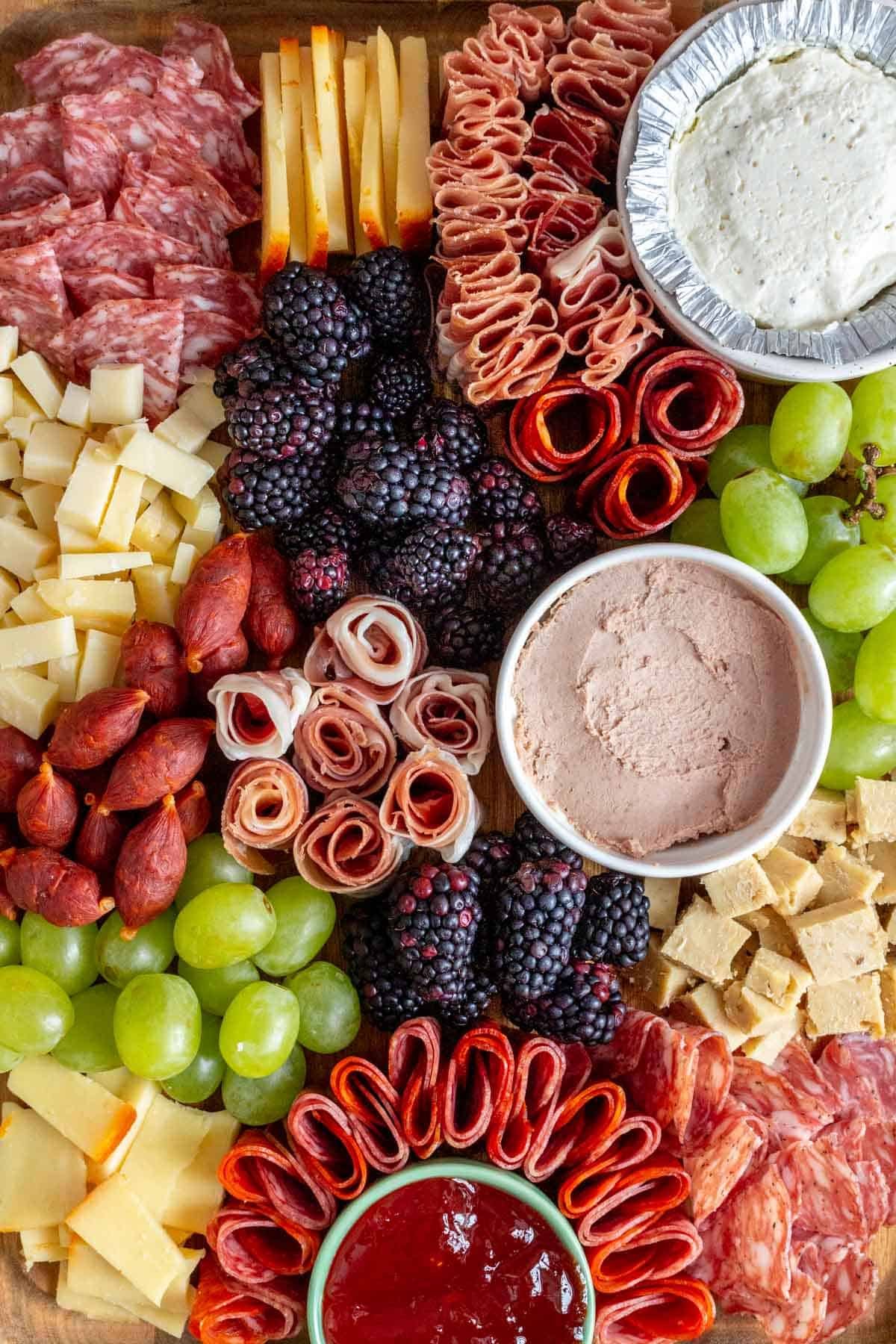
Photo credit: Carmy
What You Need
- Large board, platter, or baking sheet
- 3 to 4 cheeses with different textures
- 2 to 4 cured meats
- 2 or 3 kinds of crackers or sliced baguette
- Fresh fruit like grapes, berries, or sliced apples
- Dried fruit and nuts
- Jam, honey, or mustard
- Olives and pickles
- Small bowls, cheese knives, and fresh herbs for garnish
Carmy suggests a simple ratio of 3 to 4 cured meats, 3 to 4 cheeses, and 3 to 4 kinds of crackers, plus fresh berries, jam, nuts, and herbs.
How Much Food per Person
For an appetizer board, plan about 2 to 3 ounces of cheese and 2 to 3 ounces of meat per person. If the board is the main meal, double those amounts. For larger groups, add an extra cheese and a second kind of cracker.
Step 1. Choose Your Board
Pick a board big enough to hold everything with a little room to spare. Wooden cutting boards, slate platters, and even rimmed baking sheets all work great.
Step 2. Place Bowls First
Set small bowls for jam, honey, olives, and dips on the board first. Spread them out so they act as anchors for the rest of the food.
Step 3. Add the Cheeses
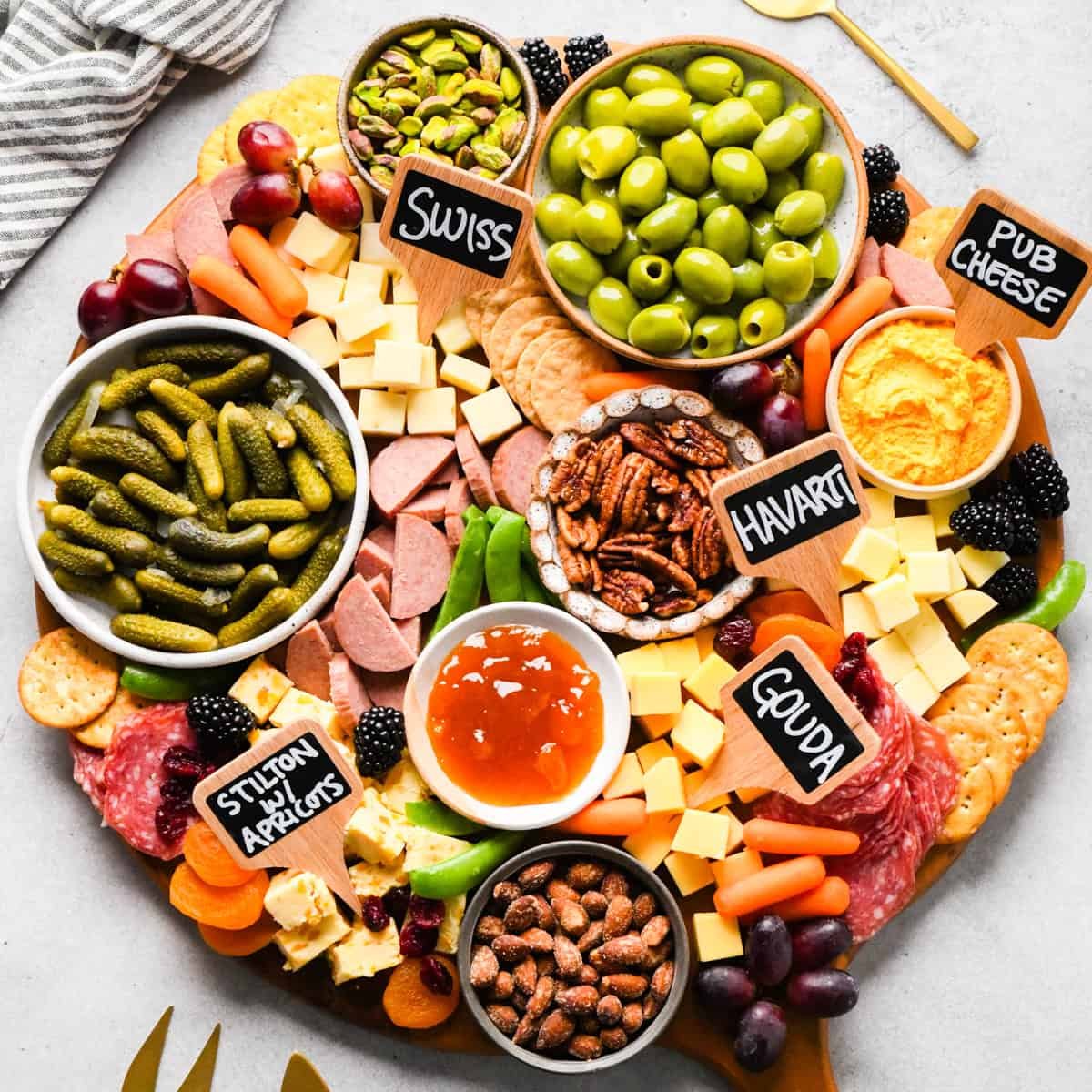
Photo credit: JoyFoodSunshine
Place cheeses in different spots around the board. Mix hard, semi soft, and soft varieties, and cut some into slices or cubes so they are easy to grab. Joy Food Sunshine uses Swiss, gouda, Havarti, white stilton with apricots, and a cheddar spread for lots of variety.
Step 4. Add the Meats
Fold salami into quarters, roll or ribbon prosciutto, and fan out thin slices. Tuck the meats near the cheeses so guests can make easy pairings.
Step 5. Add Crackers and Bread
Fan crackers and baguette slices along the edges and in open spaces. Keep some crackers in a separate bowl to refill the board as it empties.
Step 6. Fill the Gaps
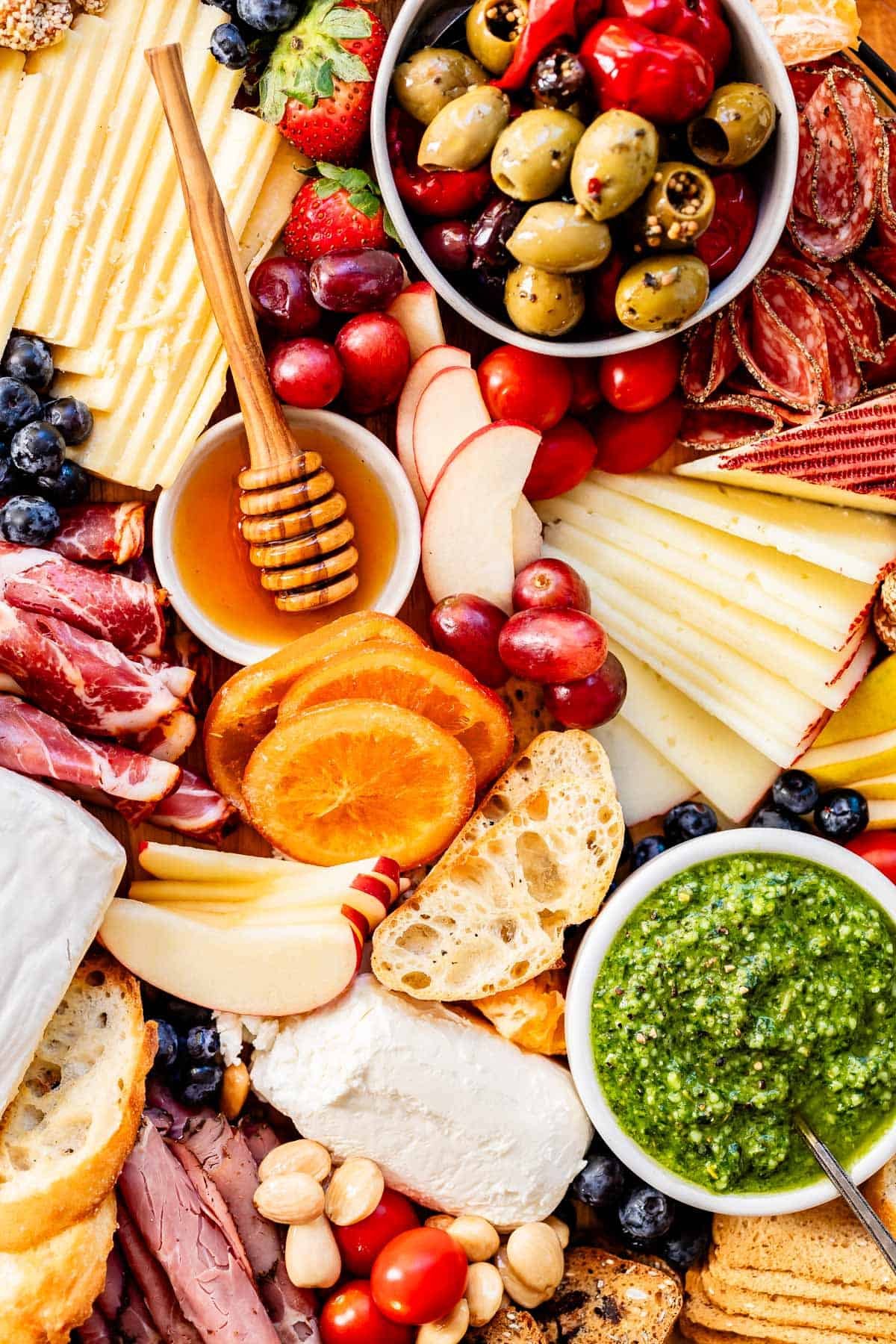
Photo credit: thefoodcharlatan.com
Fill every empty space with grapes, berries, sliced apples, dried fruit, nuts, pickles, and olives. Filling the board completely makes it look abundant and inviting. Food Charlatan adds pears, apples, blueberries, strawberries, fig jam, and pesto for color and flavor.
Step 7. Garnish and Serve
Finish with fresh rosemary, thyme, or edible flowers. Set out cheese knives and small plates, and let the cheeses sit at room temperature for about 30 minutes before guests arrive.
Tips for a Better Board
- Mix colors, shapes, and textures
- Label unusual cheeses for guests
- Offer at least one vegetarian option
- Keep backup crackers and fruit ready to refill
Wrapping Up
Building a charcuterie board comes down to a simple formula. Choose a few cheeses and meats, add crackers, then fill every gap with fruit, nuts, and pickles. For inspiration, browse our charcuterie board ideas for every budget.
What is your favorite charcuterie board pairing? Share it in the comments below!