
Sheet pan dinners promise easy cleanup, but nothing ruins one faster than mushy broccoli next to raw potatoes. Every ingredient cooks at its own pace, so tossing everything onto the pan at once rarely works out. Good news, building a sheet pan dinner where everything finishes together is simple once you understand cooking times and how to stagger them. This guide explains how to group proteins and vegetables by how long they take, when to add each one, and how to cut and space ingredients for crispy, golden results. You will also find a simple timing guide for common proteins and vegetables, plus real examples from trusted food bloggers to inspire your next dinner. Follow these steps and you will pull out a pan of evenly cooked, beautifully browned food every single time, with only one pan to wash at the end of a busy night.
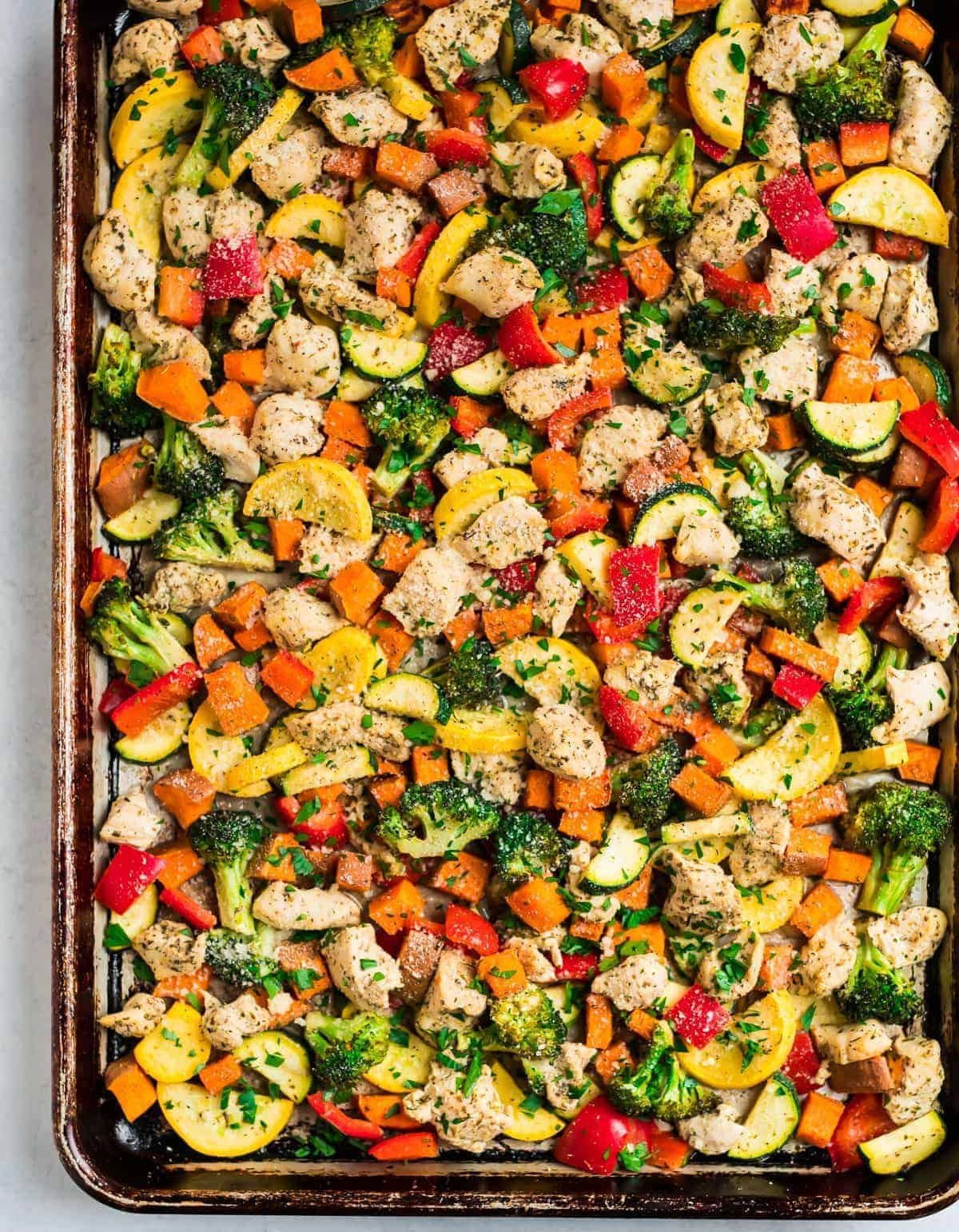
Photo credit: Well Plated
Step 1, Start With the Longest Cooking Ingredient
Dense, starchy vegetables and bone in meats need the most time. Begin with these, then add quicker items in waves so everything is done at the same moment.
Step 2, Group Ingredients by Cook Time
Long cook, 35 to 45 minutes
- Potatoes and sweet potatoes in 1 inch cubes
- Whole carrots, beets, and butternut squash
- Bone in chicken thighs and drumsticks
Medium cook, 20 to 25 minutes
- Boneless chicken breast or thighs
- Smoked sausage and kielbasa
- Broccoli, cauliflower, and Brussels sprouts
- Bell peppers and onions
Quick cook, 8 to 15 minutes
- Shrimp and thin fish fillets
- Salmon fillets
- Asparagus, green beans, and zucchini
- Cherry tomatoes
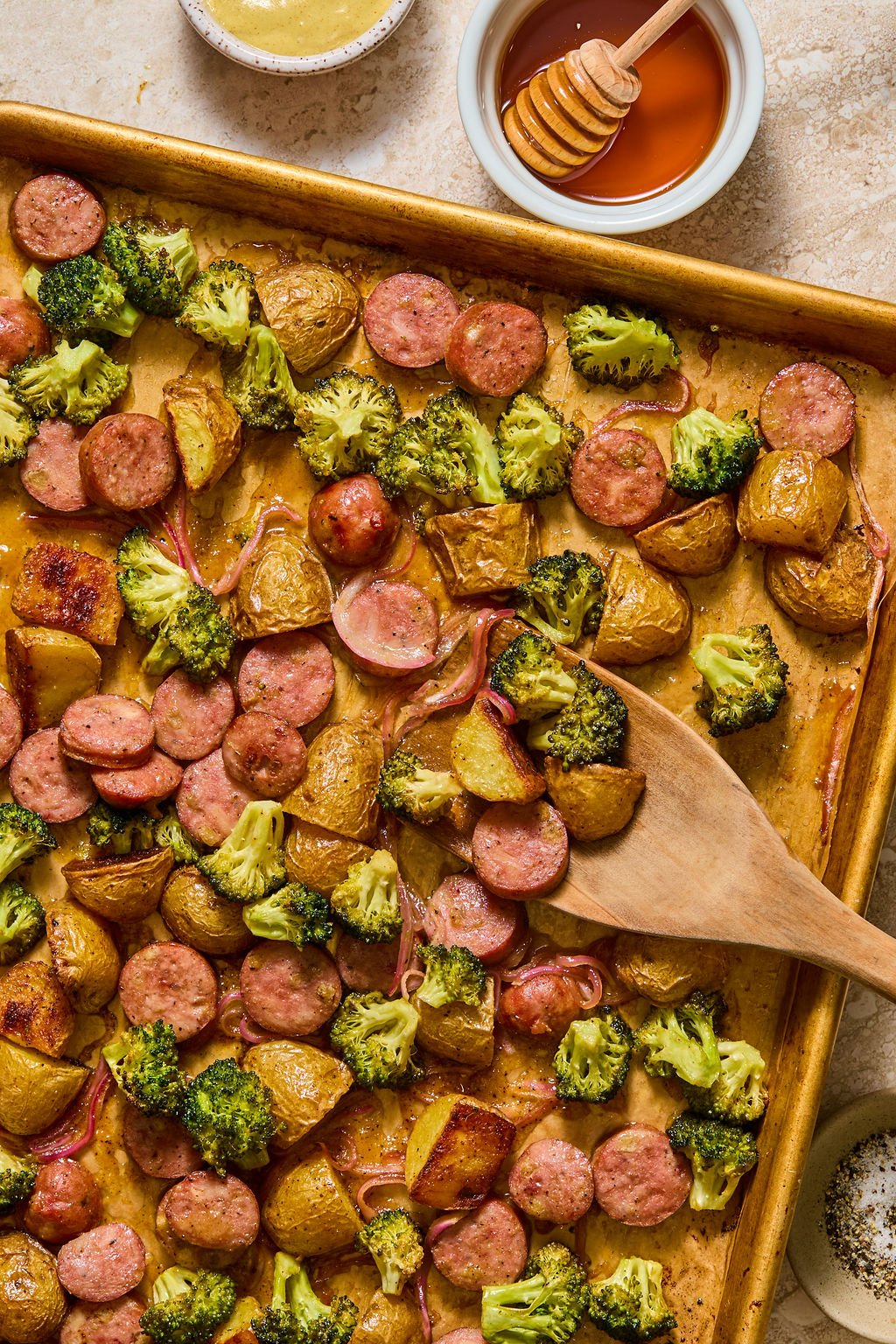
Photo credit: Lauren Fit Foodie
Step 3, Cut Smart
Cut slow cooking vegetables smaller and quick cooking ones larger. Thin potato wedges and chunky zucchini can finish together, which lets you add everything closer to the same time.
Step 4, Give Everything Space
Crowded pans steam instead of roast. Spread food in a single layer with a little room between pieces, and use two pans if needed. Space is what creates crispy edges and caramelized flavor.

Photo credit: Ambitious Kitchen
Step 5, Stagger Your Additions
Start potatoes first, add chicken after 15 minutes, then toss in broccoli for the last 15 minutes. For salmon or shrimp, roast vegetables until nearly done and add seafood for the final 8 to 12 minutes.
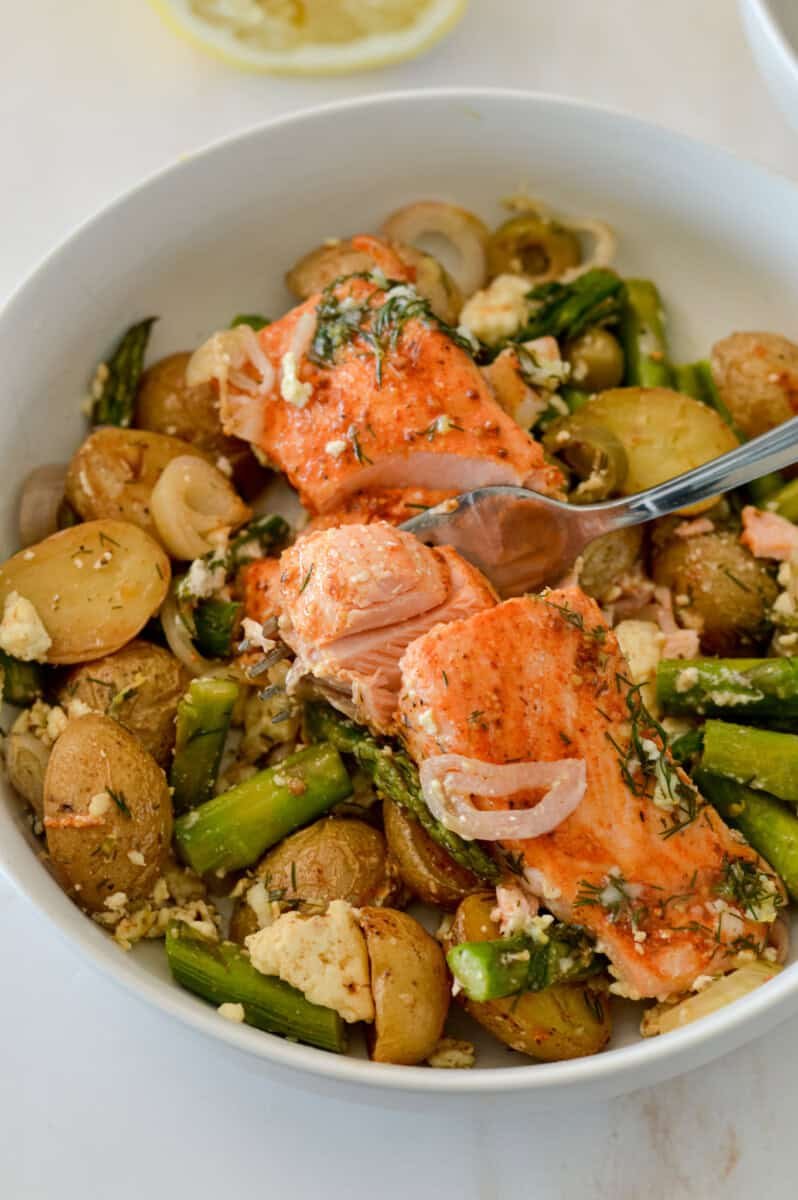
Photo credit: Nourished by Nic
Step 6, Use High Heat
Most sheet pan dinners roast best between 400 and 425 degrees Fahrenheit. High heat browns food quickly before it dries out. Place the pan on the middle rack for even cooking.
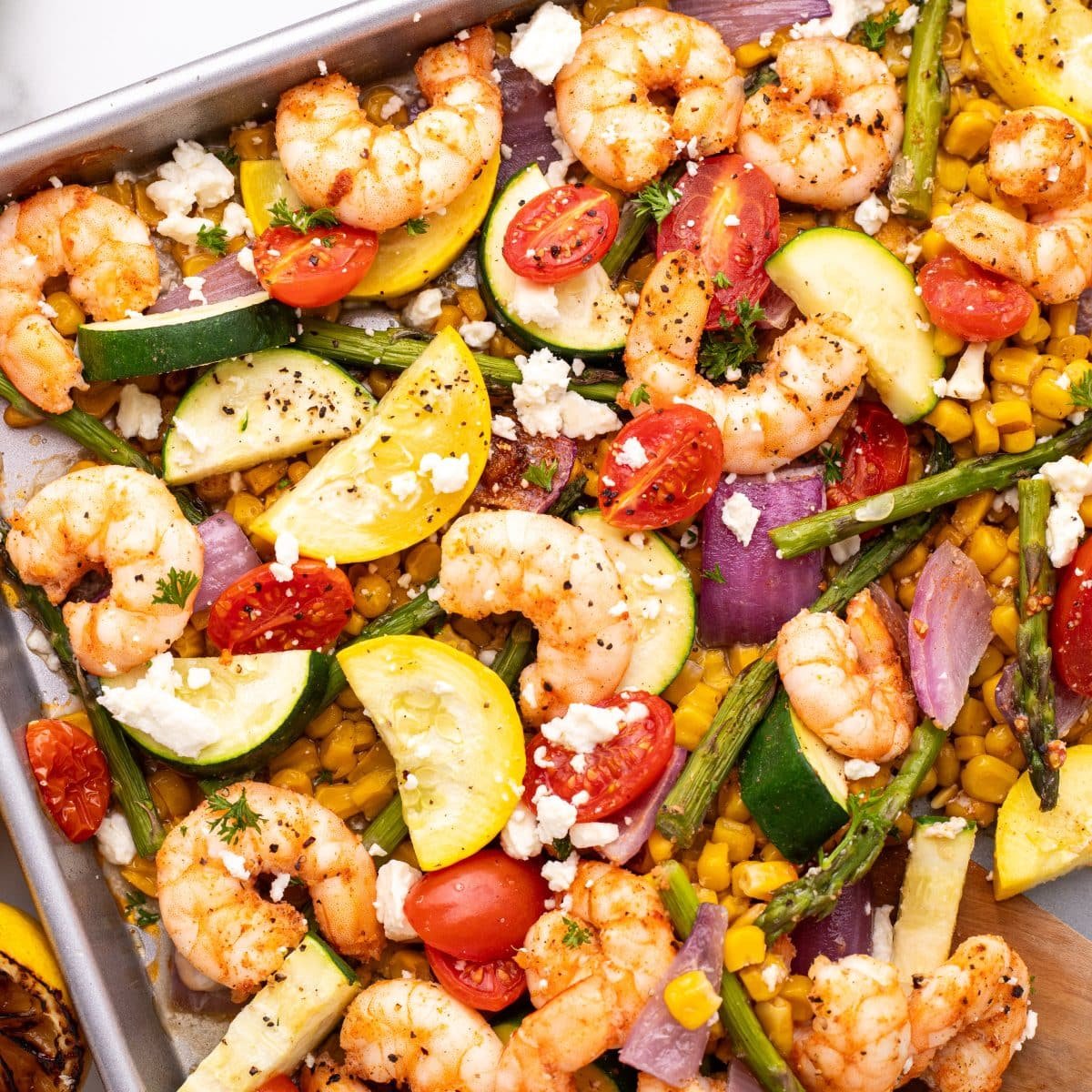
Photo credit: The Country Cook
Step 7, Season in Layers
Toss each ingredient with oil and seasoning before it goes on the pan. Finish with fresh herbs, lemon juice, or a drizzle of sauce right before serving for bright flavor.
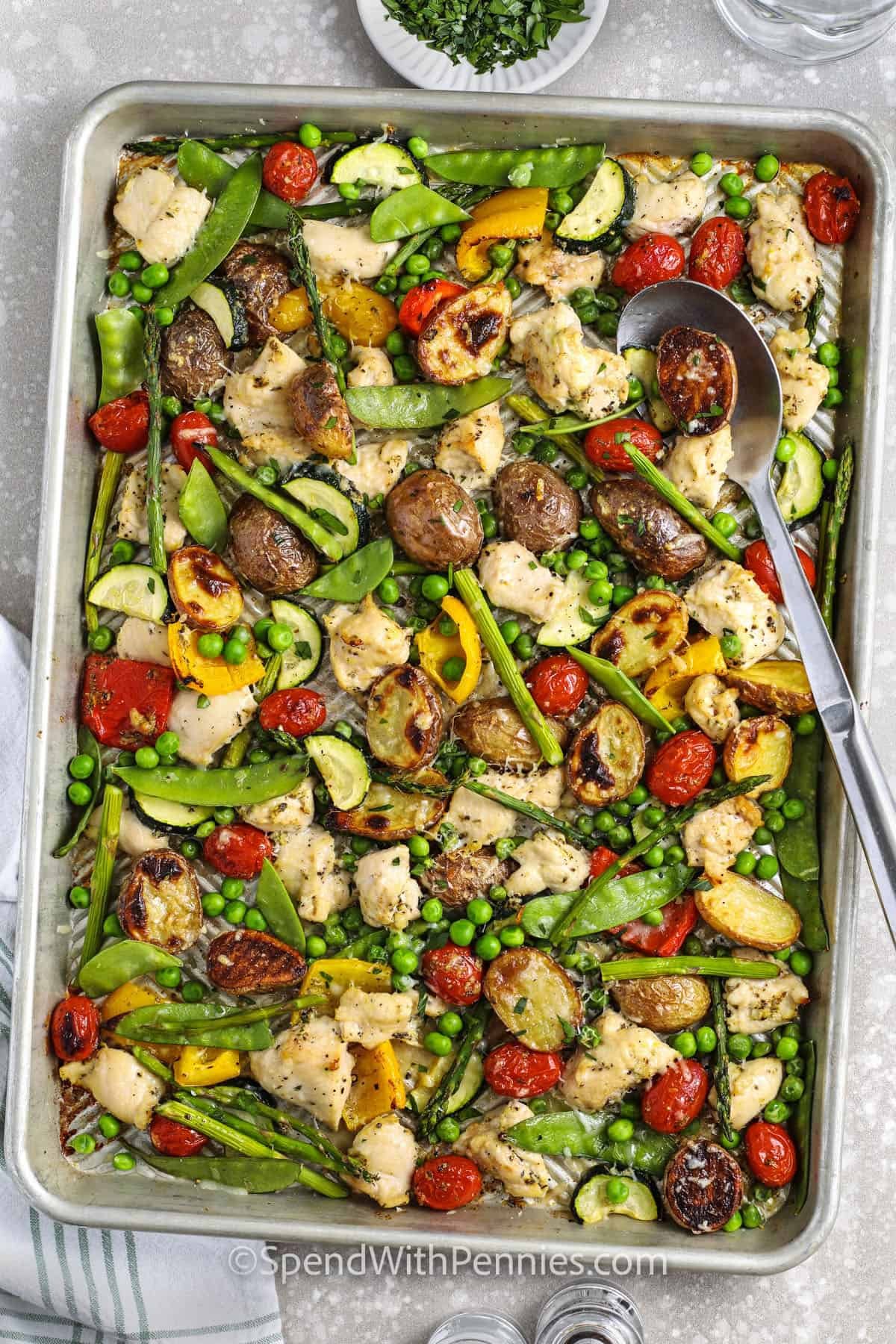
Photo credit: Spend With Pennies
Recipes to Practice With
- Sheet Pan Chicken and Rainbow Vegetables from Well Plated
- Sheet Pan Herby Lemon Garlic Chicken and Potatoes from Ambitious Kitchen
- Sheet Pan Chicken and Vegetables from Spend With Pennies
- Honey Mustard Chicken Sausage and Potato Sheet Pan from Lauren Fit Foodie
- Sheet Pan Lemon Dill Salmon and Asparagus from Nourished by Nic
- Sheet Pan Shrimp and Vegetables from The Country Cook
Wrapping Up
Once you know which ingredients take longest, sheet pan dinners become foolproof. Start dense foods first, add quick items later, and leave plenty of space for browning. Need ideas to try? Browse our sheet pan dinners for busy nights and pin this timing guide for later.
What is your go to sheet pan combination? Share it in the comments below!