
Ask ten people how they meal prep and you will hear two very different answers. Some cook complete meals, portion them into containers, and grab one each day. Others prep ingredients, like grilled chicken, chopped veggies, and a pot of rice, then mix and match fresh meals all week. Both methods save time and money, but they fit different lifestyles, budgets, and family sizes. Picking the wrong one is a big reason people quit after a few weeks. In this guide, you will learn how full meal prep and ingredient prep work, the pros and cons of each, and who each style suits best. You will also see sample recipes for both methods and a simple hybrid plan that combines the two. By the end, you will know which approach matches your schedule, your taste for variety, and how much time you want to spend in the kitchen on Sunday.
What Is Full Meal Prep?
Full meal prep means cooking complete meals and dividing them into individual containers. Each box holds a protein, a grain or starch, and vegetables, ready to reheat. You make decisions once and then simply grab and go for the rest of the week.
What Is Ingredient Prep?
Ingredient prep means cooking or chopping building blocks instead of finished meals. You might roast a tray of chicken and peppers, cook quinoa, wash greens, and mix a sauce. Each day, you combine them in new ways, such as a salad on Monday and tacos on Tuesday.
Full Meal Prep Pros and Cons
- Pro. No daily decisions or assembly needed.
- Pro. Portions are set, which helps with calorie or macro goals.
- Pro. Great for packing lunches for work.
- Con. Eating the same meal several days in a row can get boring.
- Con. Some foods lose texture by day four.
Ingredient Prep Pros and Cons
- Pro. More variety, since you build different meals each day.
- Pro. Food stays fresher because it is assembled right before eating.
- Pro. Works well for families with picky eaters.
- Con. You still spend a few minutes putting meals together.
- Con. It takes more planning to avoid leftover odds and ends.
Which One Fits Your Week?
Choose full meal prep if you want zero thinking at lunch, follow a set eating plan, or pack meals for work. Choose ingredient prep if you cook for a family, get bored easily, or enjoy a few minutes of cooking each night. Many people end up using both.
Sample Recipes for Each Method
Full Meal Prep Pick. Teriyaki Chicken Power Bowls

Photo credit: Peanut Butter and Fitness
Chicken breast, edamame, broccoli, carrots, red pepper, and onion cook with a sweet teriyaki sauce. Everything gets portioned into six complete bowls. Each one packs 42 grams of protein.
Bowls like this are made for full meal prep because nothing needs assembly later. Rice or quinoa makes a filling base. Reheat for two minutes and lunch is ready.
For recipe: Teriyaki Chicken Power Bowls
Ingredient Prep Pick. Sheet Pan Basil Balsamic Chicken and Peppers
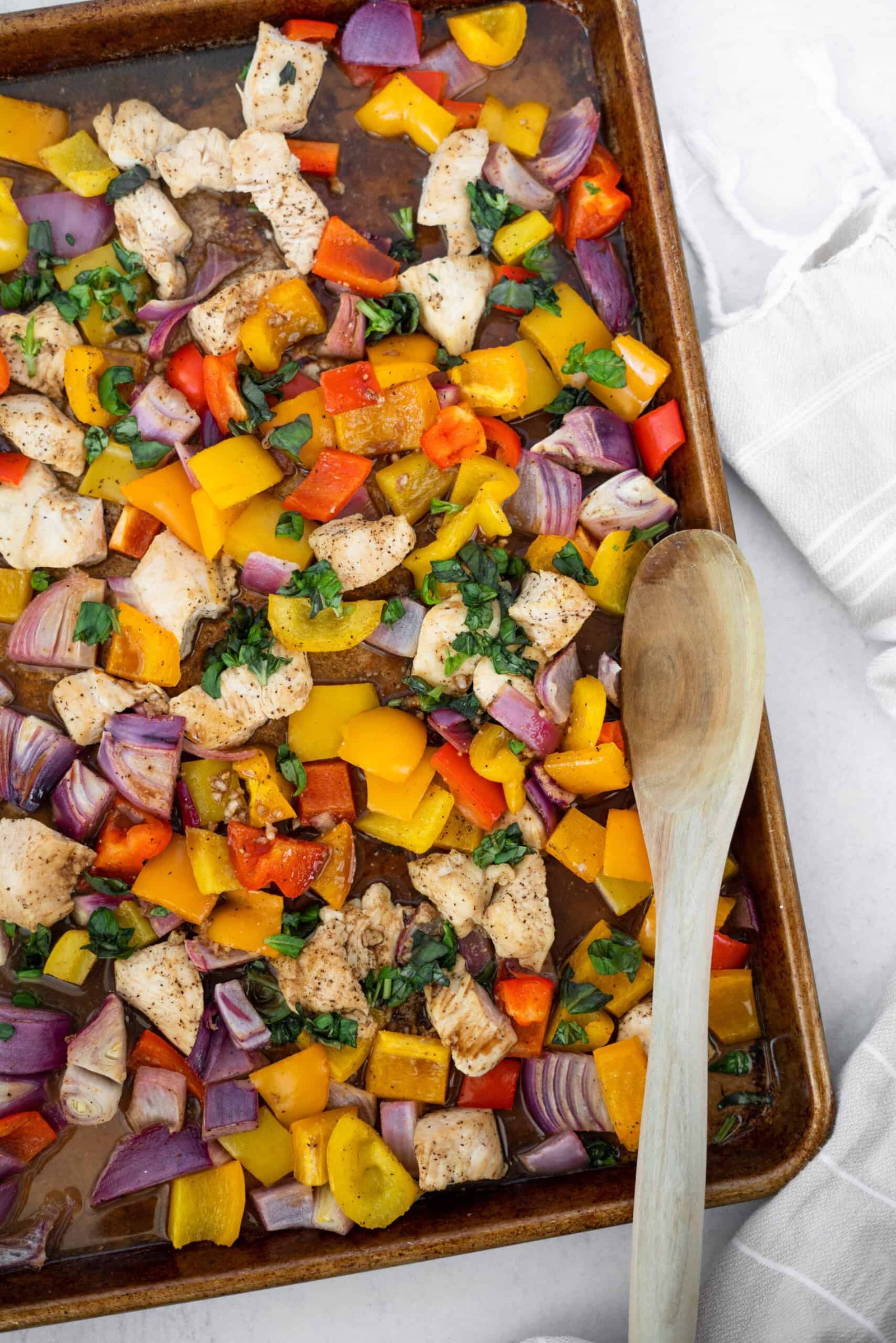
Photo credit: Lauren Fit Foodie
Chicken, bell peppers, and red onion roast with balsamic vinegar, honey, Dijon, and garlic. Fresh basil finishes the tray. Each serving is only about 188 calories.
Use this as a building block all week. Toss it into wraps, salads, pasta, or rice bowls. One tray can become four different meals.
For recipe: Sheet Pan Basil Balsamic Chicken and Peppers
Works for Both. Quinoa Salad

Photo credit: Well Plated by Erin Clarke
Quinoa, chickpeas, roasted red peppers, spinach, and herbs get tossed in a lemony smoked paprika dressing. It holds up well in the fridge. Six servings come from one batch.
Pack it as a complete lunch or use it as a side with your prepped protein. It tastes great cold. Feta or almonds make easy toppings.
For recipe: Quinoa Salad
Try a Simple Hybrid Plan
- Fully prep lunches for Monday through Wednesday.
- Prep ingredients like a protein, a grain, and chopped veggies for Thursday and Friday.
- Make one big sauce or dressing to use in different ways.
- Keep a few freezer meals as backups for busy nights.
Wrapping Up
Full meal prep and ingredient prep both save time, money, and stress. Full meal prep is best when you want grab and go lunches and set portions. Ingredient prep shines when you want variety, fresher meals, or cook for a family. If you cannot decide, try the hybrid plan and see what sticks. Either way, the best method is the one you will actually keep doing. For more ideas, see our meal prep for beginners guide. Pin this guide to help plan your next prep day.
Are you team full meal prep or team ingredient prep? Tell us in the comments below!