
Wondering what you can actually eat on the Mediterranean diet? This printable food list makes grocery shopping and meal planning simple. Oldways, together with the Harvard School of Public Health and the World Health Organization, created the Mediterranean Diet Pyramid in 1993 to show which foods to eat most and which to enjoy less often. Plant foods form the wide base, seafood sits above them, then poultry, eggs, and dairy, with red meat and sweets at the small tip. Daily physical activity and meals shared with others support the whole structure. This guide walks through each tier from bottom to top with examples of what to buy and an easy recipe that fits. At the end, you’ll find a complete Mediterranean diet food list organized by category. Print it, stick it on your fridge, or take it to the store on your phone. Use it as a reference rather than a strict rulebook, since this eating style is famously flexible.
How the Mediterranean Diet Pyramid Works
Each tier shows how often to eat a food group rather than an exact serving size. Foods near the bottom should show up at most meals. Foods near the top should appear less often and in smaller amounts. Water is the main drink, and physical activity sits under everything.
1. Vegetables and Fruits (Every Meal)
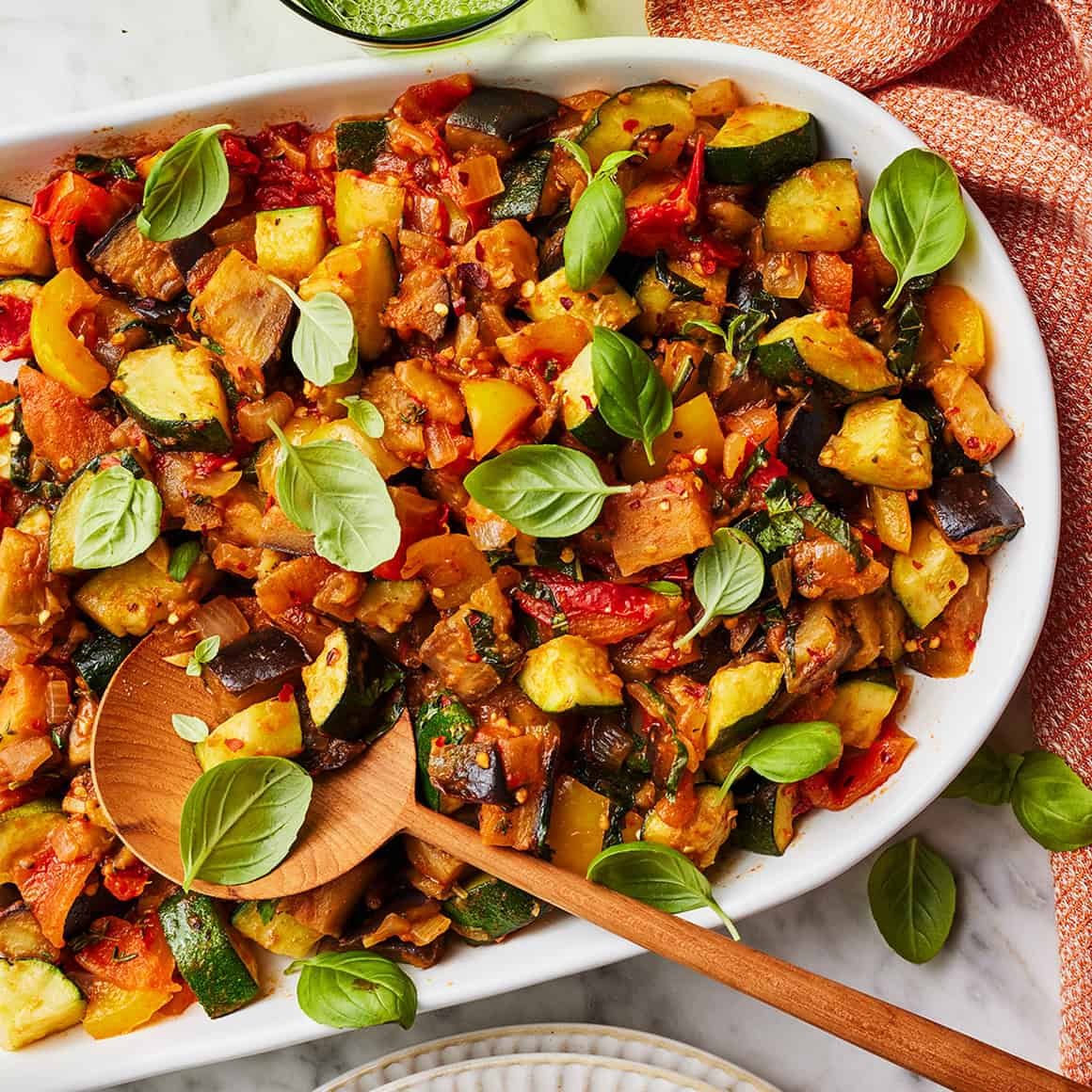
Photo credit: Love and Lemons
Produce sits at the wide base of the Mediterranean Diet Pyramid. Oldways groups all plant foods together to show they should anchor most meals. Fill half your plate with colorful vegetables, then add fresh fruit for snacks and dessert.
Shop for tomatoes, eggplant, zucchini, peppers, leafy greens, citrus, berries, figs, and grapes. Frozen vegetables and fruit count too and save money. Ratatouille packs five vegetables into one cozy dish.
For recipe: Ratatouille
2. Whole Grains (Every Meal)
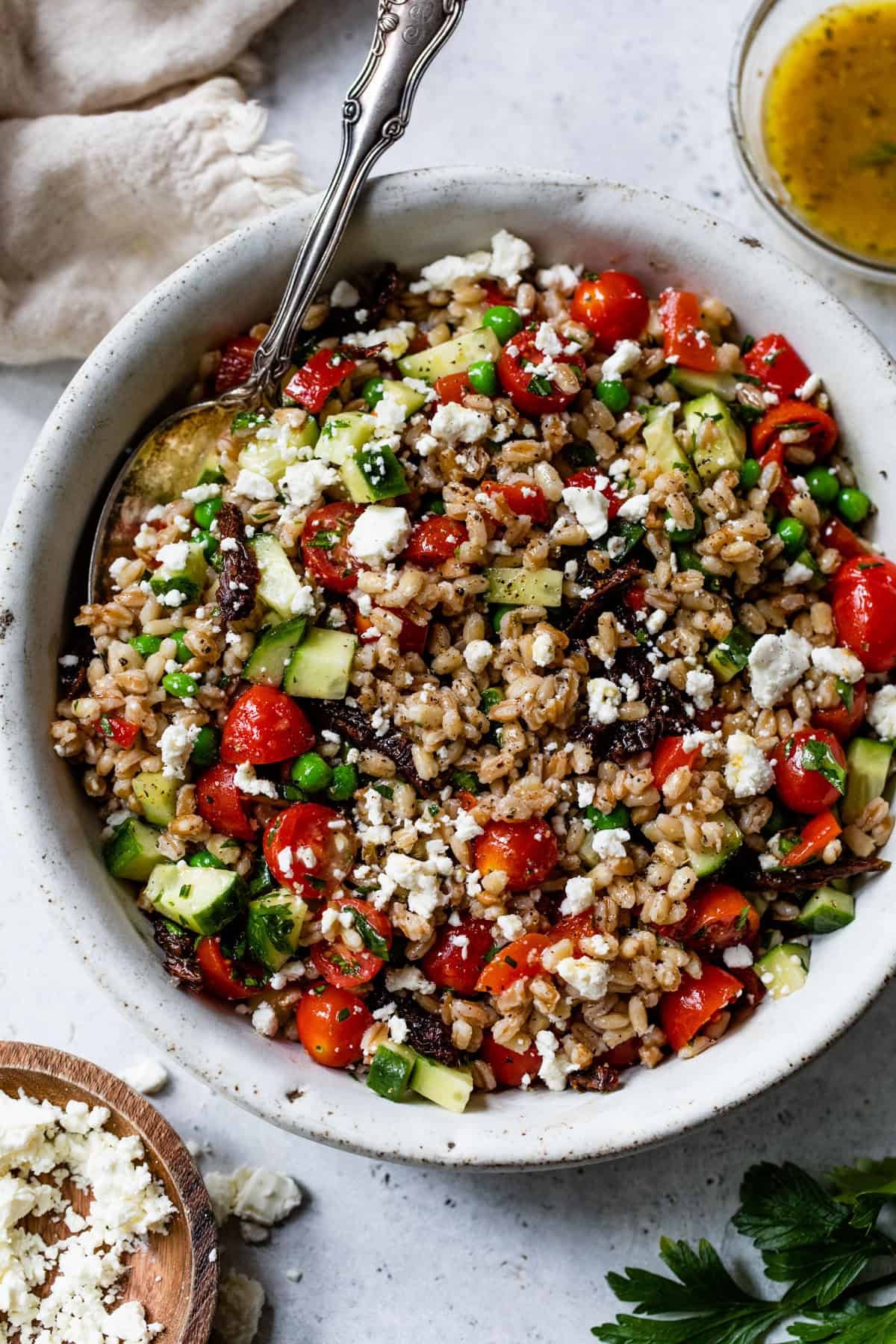
Photo credit: Well Plated
Grains share the base of the pyramid, and Oldways specifies mostly whole grains. Farro, bulgur, barley, oats, brown rice, and whole wheat bread are smart staples. These keep you full and add fiber to every meal.
Swap white rice and pasta for whole grain versions a few nights a week. Cook grains in bulk so salads and bowls come together fast. Italian farro salad stays fresh in the fridge for days.
For recipe: Italian Farro Salad
3. Beans, Nuts, and Seeds (Every Day)

Photo credit: Ambitious Kitchen
Legumes, nuts, and seeds bring plant protein, fiber, and healthy fats. Chickpeas, lentils, white beans, almonds, walnuts, pistachios, and sesame seeds all belong here. Many Mediterranean meals use beans as the main protein.
Keep canned chickpeas and lentils in the pantry for quick dinners. Grab a small handful of nuts when you need a snack between meals. This Moroccan chickpea quinoa salad combines grains and legumes in one bowl.
For recipe: Moroccan Chickpea Quinoa Salad
4. Olive Oil, Herbs, and Spices (Every Day)
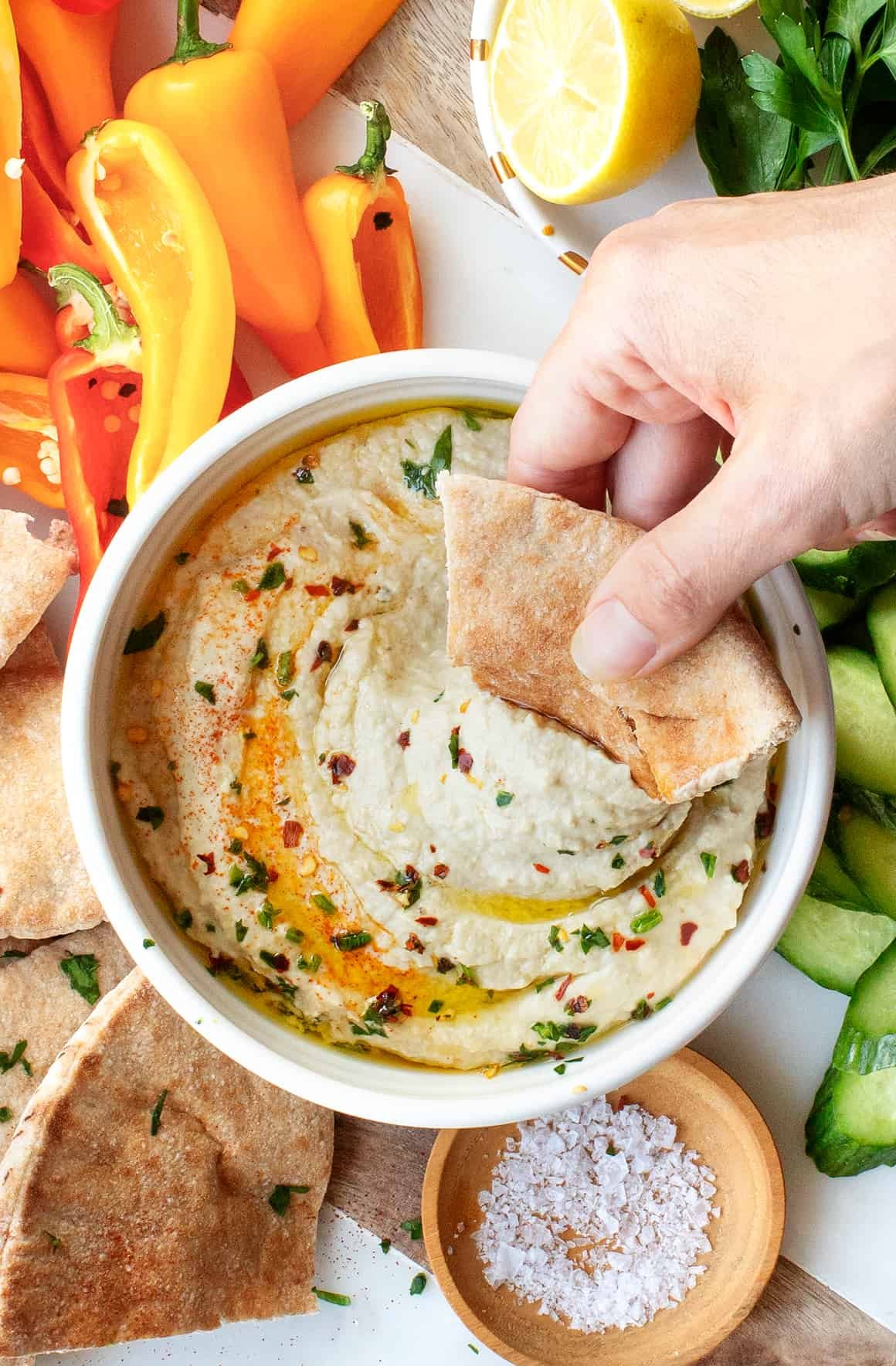
Photo credit: Love and Lemons
Extra virgin olive oil is the main fat used for cooking and dressing. Oldways added herbs and spices to the pyramid for both health and flavor. Garlic, oregano, basil, parsley, mint, cumin, and paprika do the heavy lifting.
Drizzle olive oil over roasted vegetables, beans, and dips. Fresh herbs and lemon help you use less salt without losing flavor. Smoky baba ganoush shows off olive oil, garlic, and tahini together.
For recipe: Baba Ganoush
5. Fish and Seafood (Twice a Week or More)
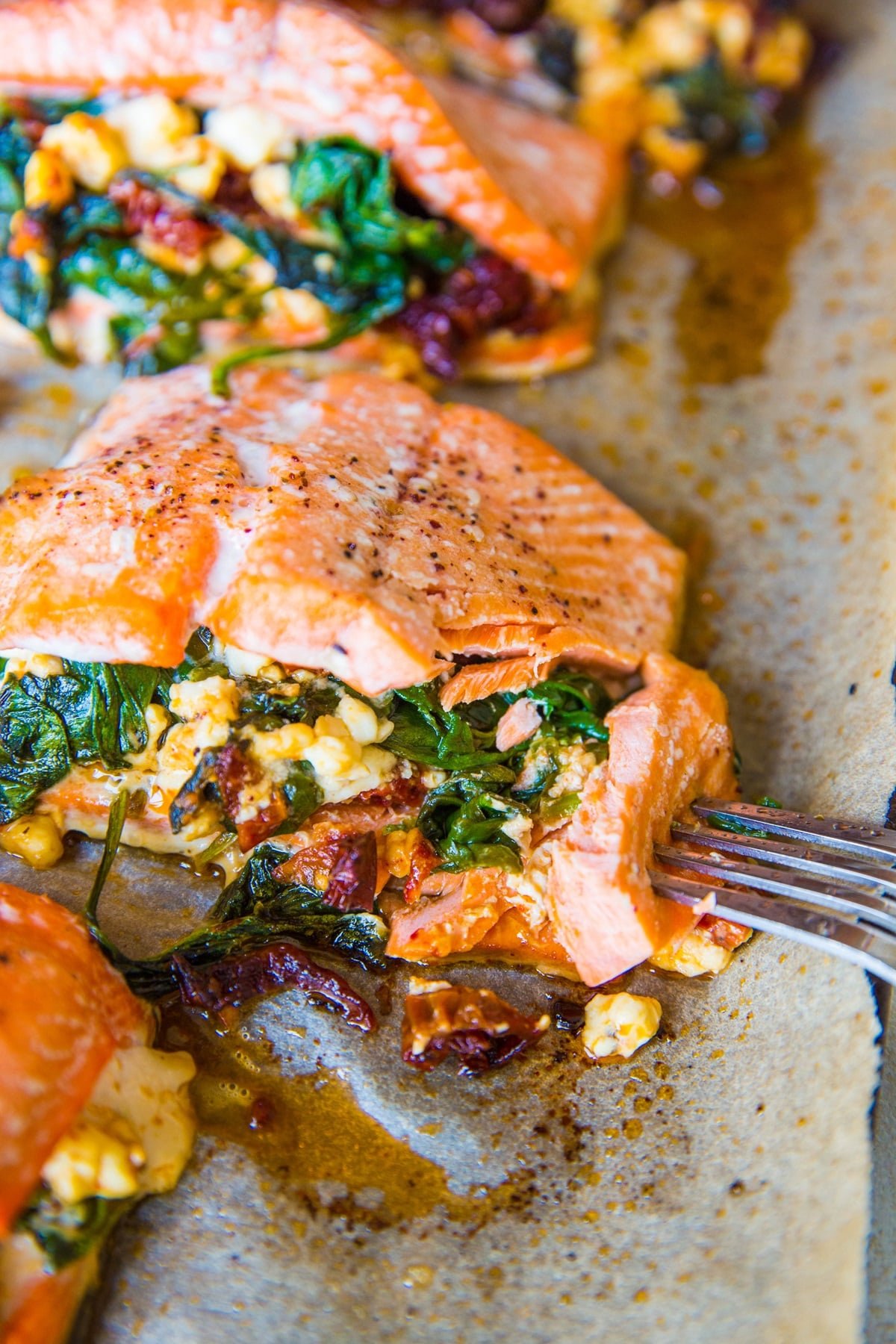
Photo credit: The Roasted Root
Seafood earns its own tier just above plant foods. Salmon, sardines, tuna, cod, shrimp, and mussels supply lean protein and omega 3 fats. Aim for at least two seafood meals each week.
Canned tuna and sardines make budget friendly lunches. Frozen fish fillets bake quickly on a sheet pan with vegetables. This stuffed salmon needs only four ingredients.
For recipe: Mediterranean Stuffed Salmon
6. Poultry, Eggs, Cheese, and Yogurt (Moderate Portions)
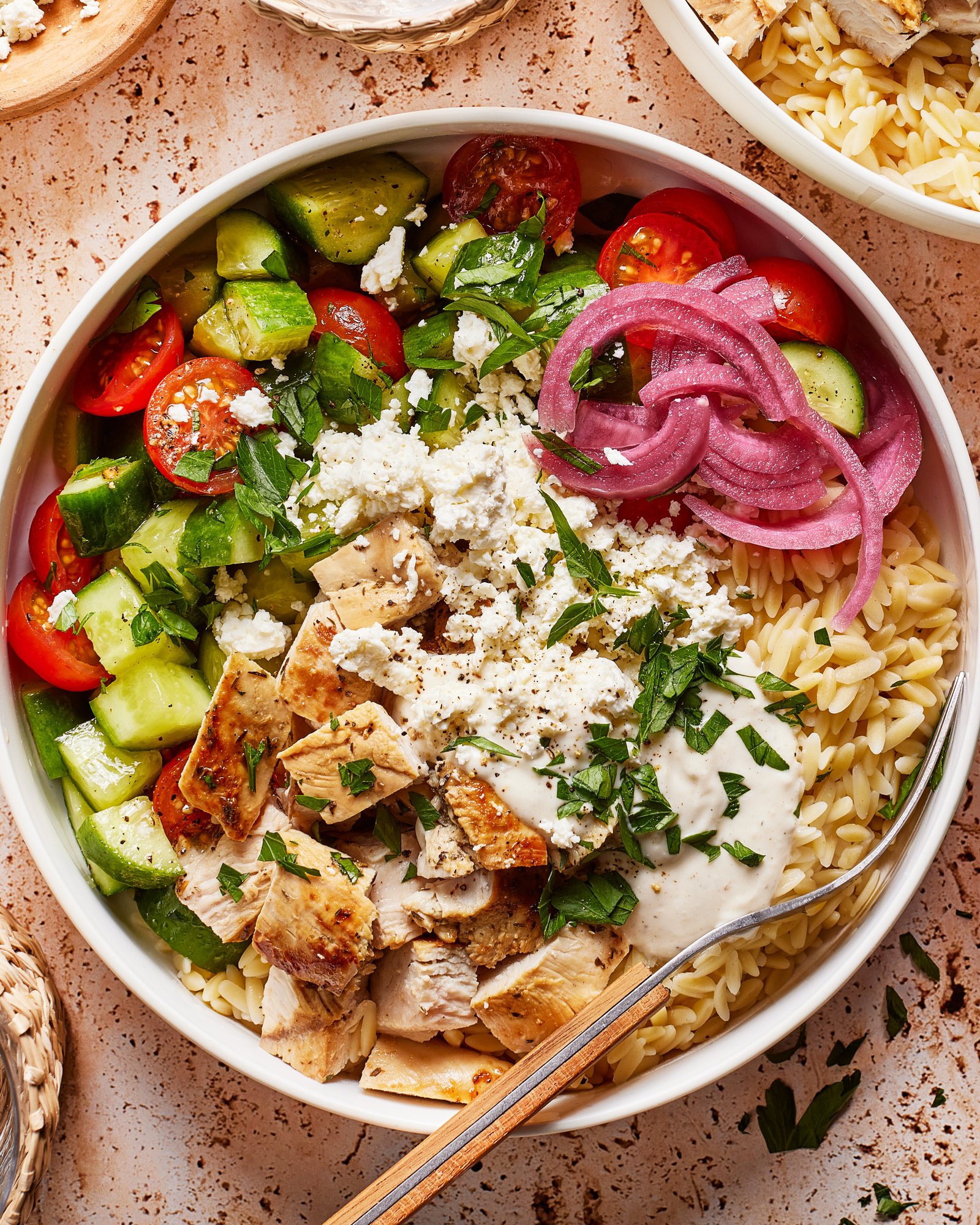
Photo credit: Kalejunkie
Poultry, eggs, cheese, and yogurt appear in moderate portions daily to weekly. Feta and Greek yogurt are classic choices that add protein and tang. Chicken and eggs fill in when you aren’t eating fish or beans.
Use plain Greek yogurt in sauces, dips, and breakfast bowls. Sprinkle cheese for flavor rather than piling it on. Greek chicken orzo bowls hit this tier with chicken, feta, and tzatziki.
For recipe: Greek Chicken Orzo Bowls
7. Red Meat and Sweets (Less Often)
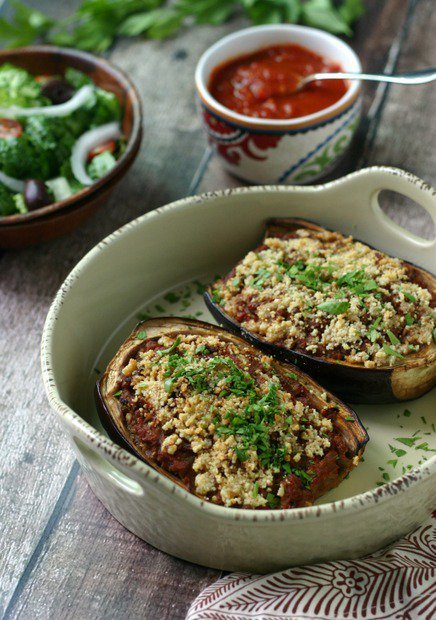
Photo credit: Everyday Maven
Red meat and sweets sit at the small tip of the pyramid. Enjoy them occasionally and in small portions rather than daily. Most protein should come from the tiers below.
Stretch ground beef by mixing it with vegetables, grains, or beans. Save rich desserts for celebrations and choose fruit most days. These stuffed eggplants use a modest amount of beef with lots of vegetables.
For recipe: Stuffed Eggplant with Ground Beef
Printable Mediterranean Diet Food List
Press Ctrl+P on Windows or Cmd+P on Mac to print this section, or save it as a PDF on your phone.
Vegetables
- Tomatoes, cucumbers, and bell peppers
- Eggplant, zucchini, and artichokes
- Spinach, kale, arugula, and romaine
- Onions, garlic, and shallots
- Broccoli, cauliflower, and Brussels sprouts
- Carrots, beets, and sweet potatoes
- Mushrooms and olives
Fruits
- Lemons, oranges, and clementines
- Grapes, figs, and dates
- Apples, pears, and peaches
- Berries and pomegranates
- Melon and apricots
Whole Grains
- Farro, bulgur, and barley
- Oats and quinoa
- Brown rice and whole wheat couscous
- Whole wheat pasta and orzo
- Whole grain bread and pita
Beans and Legumes
- Chickpeas
- Lentils (red, green, brown)
- White beans, cannellini, and gigante beans
- Fava beans and split peas
Nuts and Seeds
- Almonds, walnuts, and pistachios
- Pine nuts and hazelnuts
- Sesame seeds and tahini
- Sunflower and pumpkin seeds
Healthy Fats
- Extra virgin olive oil
- Olives
- Avocado
- Nut butters with no added sugar
Herbs and Spices
- Oregano, basil, thyme, and rosemary
- Parsley, dill, and mint
- Cumin, paprika, and cinnamon
- Za’atar, sumac, and red pepper flakes
- Black pepper and garlic powder
Fish and Seafood
- Salmon and trout
- Sardines and anchovies
- Tuna (fresh or canned)
- Cod, halibut, and sea bass
- Shrimp, mussels, and clams
Poultry, Eggs, and Dairy
- Chicken and turkey
- Eggs
- Plain Greek yogurt
- Feta, Parmesan, and ricotta
- Halloumi and mozzarella
Enjoy Less Often
- Beef, lamb, and pork
- Processed meats like bacon and salami
- Sweets, pastries, and sugary drinks
- Refined white bread and white pasta
- Highly processed packaged snacks
Pyramid details come from Oldways, the nonprofit that developed the Mediterranean Diet Pyramid with the Harvard School of Public Health and the World Health Organization. Check with your doctor or a registered dietitian before making big changes to your diet.
Wrapping Up
With this food list in hand, filling your cart with Mediterranean staples gets so much easier. Start at the base of the pyramid and build every meal from there. New to this way of eating? Read our Mediterranean diet rules for beginners and grab our Mediterranean pantry shopping list next.
What’s the first food on this list you’ll add to your cart? Tell us in the comments below!